10 Press Clipping Service Options for Media Monitoring
Compare 10 press clipping service options by media coverage, search, alerts, and reporting so you can pick the right fit for your team.
What is a team buying from a press clipping service: a collection of mentions, or confidence that important coverage isn't slipping past? A polished dashboard can't answer that question if the service misses a regional newspaper, searches only episode descriptions, or delivers a broadcast clip after the response window has closed.
The useful comparison starts with coverage channels, search and retrieval, alert speed, and reporting options. Coverage means specific publications, stations, shows, and languages, not just a list of media categories. Search depth determines whether a mention buried inside an article or audio recording can be found. Alert speed matters only when measured from publication or broadcast to a usable notification.
Reporting deserves equal scrutiny. A communications manager needs evidence that a client or executive can verify, not an unexplained mention count or a reach estimate presented as actual readership. Pricing transparency also varies across the category, so buyers need to separate the subscription from source licensing, archived content, reporting support, and integrations.
Buying principle: A service should prove that it finds the coverage that matters before its dashboard becomes part of the reporting workflow.
The options below serve different operational needs. Some specialize in podcast transcripts or regional print; others combine monitoring with broader PR tools. The right choice depends on where coverage appears and what the team must do with it afterward.
Table of Contents #
- 1. Podzone
- 2. Newz Group
- 3. Presswire
- 4. News Exposure
- 5. 360 MediaWatch
- 6. NewsPowerOnline
- 7. Meltwater
- 8. CisionOne
- 9. Agility PR Solutions
- 10. Onclusive
- Press clipping services compared
- Matching the Service to Your Coverage Reality
1. Podzone #
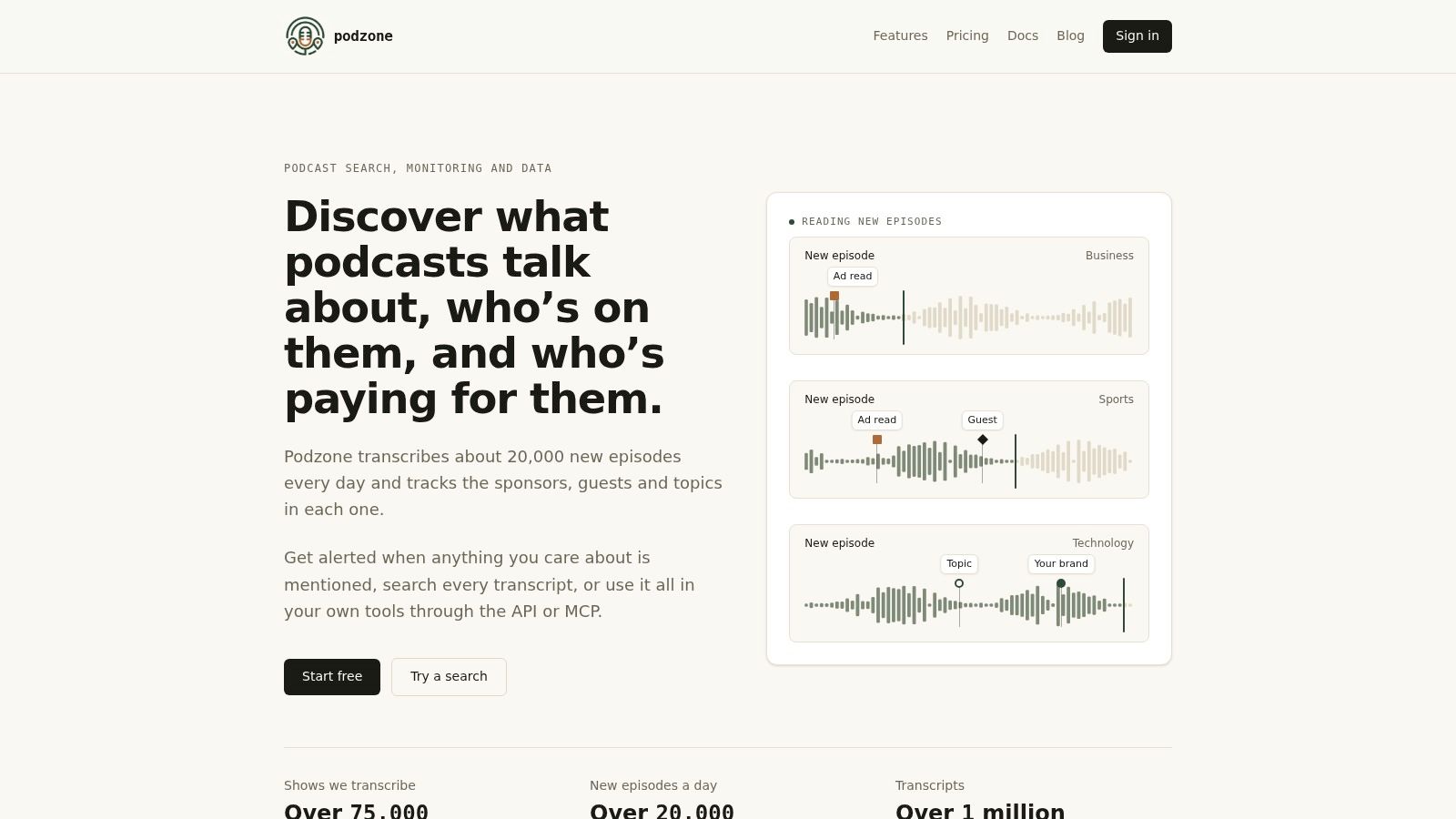
Best fit: teams that need evidence from inside podcast episodes, rather than matches limited to episode titles and descriptions. Podzone ingests publicly published podcast feeds, transcribes their episodes, and makes the resulting text searchable.
Coverage and search depth are the main reasons to consider it. Teams can search for brands, competitors, people, or topics, then open the relevant timed passage with its episode context. Quoted search terms match as an exact phrase, which helps distinguish a specific product name from loosely related discussion.
From audio mention to usable evidence #
The service combines transcript excerpts, episode details, show information, and timestamps. It links episode references to the publisher's source rather than hosting podcast audio, so a clipping remains connected to its original context.
- Alerts and integrations: Keyword rules check new transcripts, while signed webhooks can push matches into external workflows. The API and MCP server support search, transcripts, sponsors, people, and alert management.
- Research beyond mentions: Host and guest histories support booking research. Sponsor tracking identifies brands, offer codes, and ad reads, with each ad read marked over its transcript lines.
- Client reporting: Agencies may include short excerpts and results in client deliverables, but bulk redistribution of transcripts or catalogue data isn't permitted.
The trade-off is specialization. This isn't a replacement for regional newspaper clipping or television monitoring. Teams should also validate target shows, language requirements, historical availability, and end-to-end alert timing rather than relying on headline coverage totals.
A free plan includes the core feature categories, making a focused evaluation possible before increasing capacity. Paid-plan selection should follow the team's alert, transcript, and workspace requirements, not an assumption that every podcast workflow needs the largest package.
2. Newz Group #
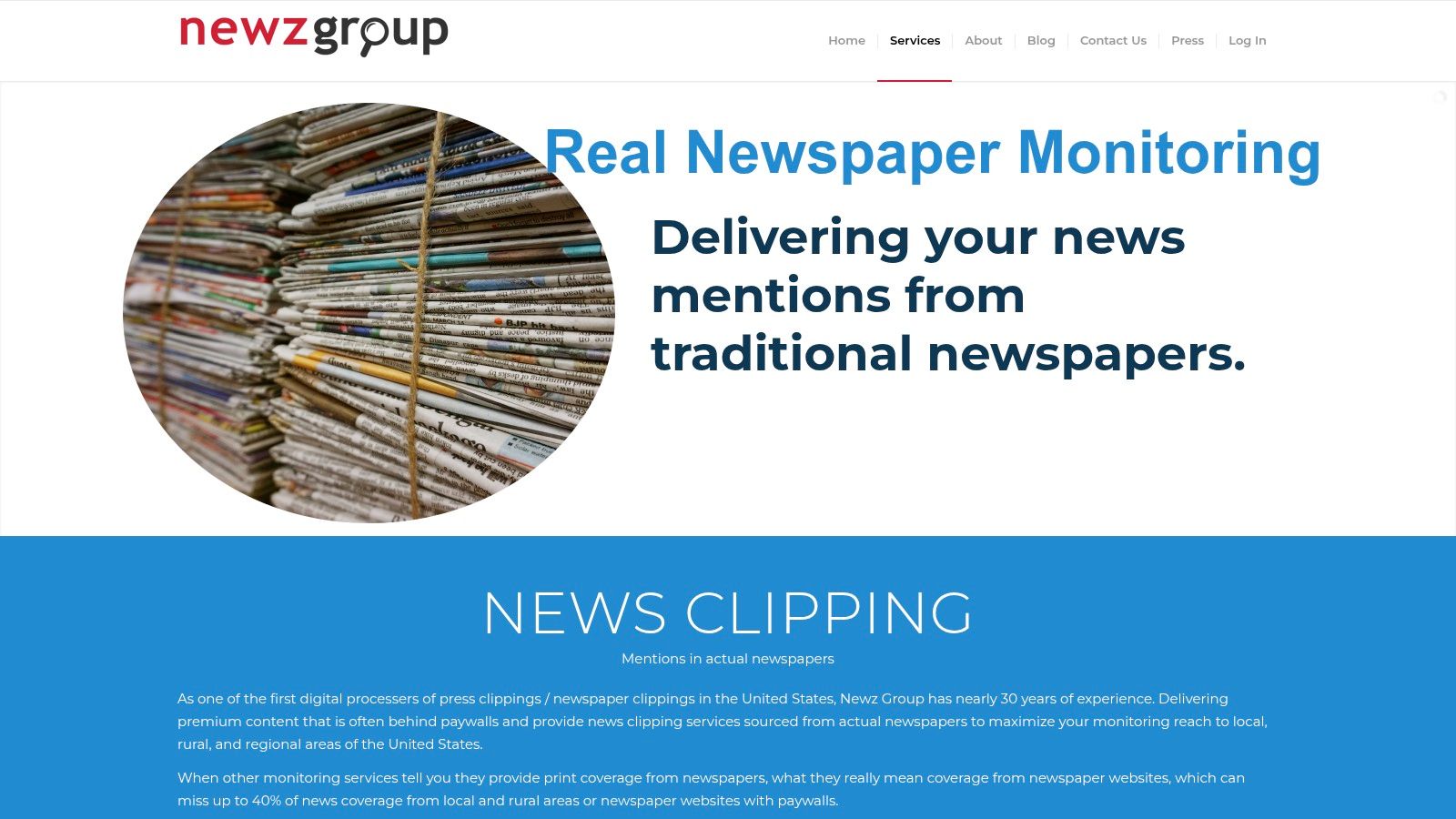
A county newspaper can matter more to a public-affairs team than another national web mention. Newz Group's press-clipping service is a candidate when regional, rural, and community newspapers belong in the monitoring brief, including print coverage that may not appear online.
Its channel mix includes newspaper clipping alongside online, broadcast, and social monitoring. That breadth is useful, but buyers should begin with a publication list: a print specialist earns its place by finding the relevant local titles, not merely by adding another online feed.
Test the print workflow #
Search depth should be evaluated through full-text retrieval, keyword filtering, and the readability of newspaper PDFs. Say an organization tracks a proposed facility: the test should include its formal name, a common abbreviation, and a local description that residents use.
- Alert speed: Request separate expectations for print processing and digital alerts. Newspaper availability and clipping review shouldn't be confused with live web monitoring.
- Reporting: Examine how clips retain publication, date, page context, and searchable text when exported or shared.
- Pricing: A direct quote is needed. The proposal should identify included titles, media types, reporting support, and any separate licensing charges.
Human review can help remove irrelevant print matches, but buyers should still inspect both rejected and accepted examples during evaluation. The strongest reason to shortlist this service is local print coverage; an online-only team may find that specialization unnecessary.
3. Presswire #
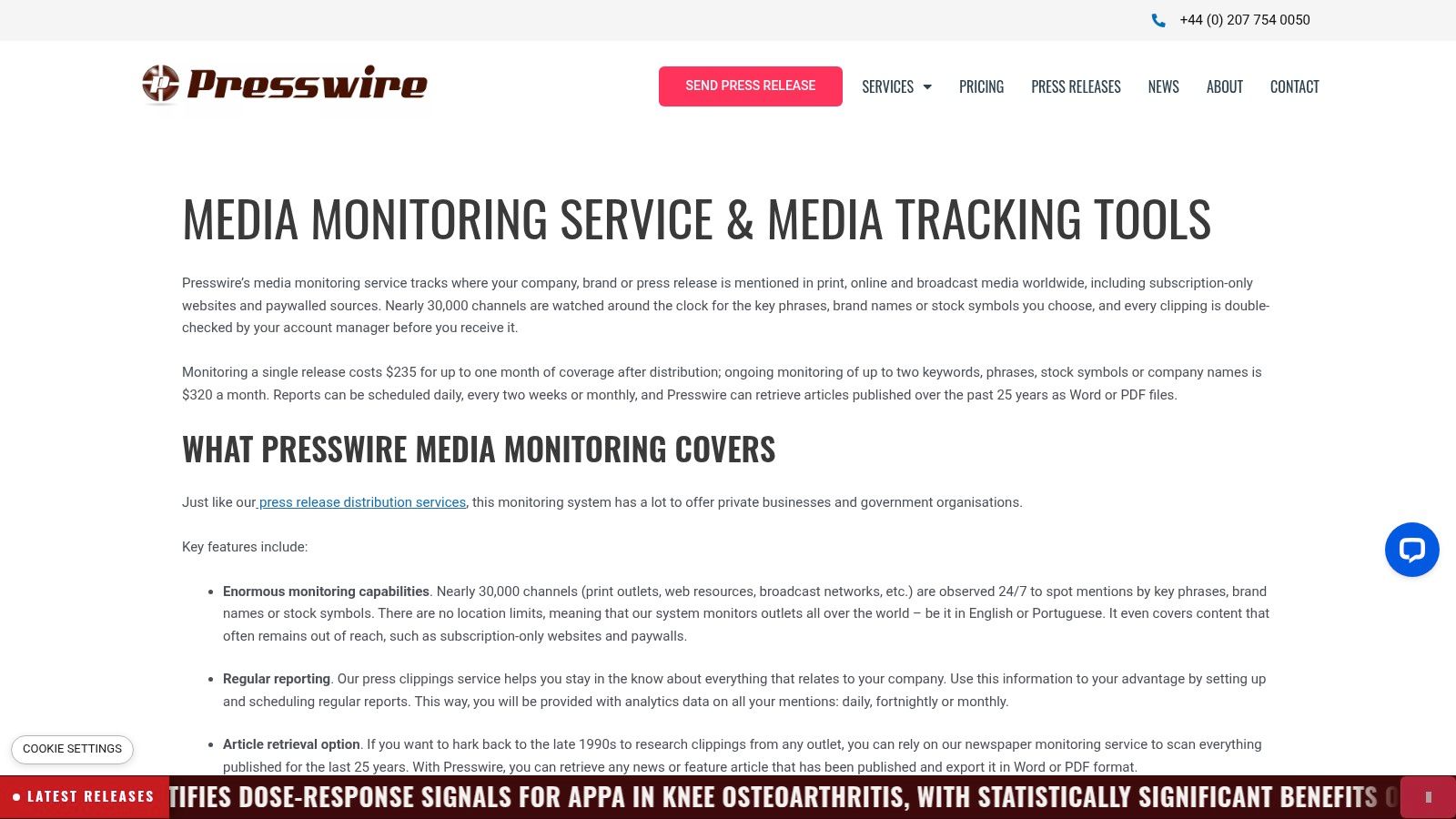
Presswire is positioned closer to a clipping service than an expansive media-intelligence suite. It offers monitoring across print, online news, paywalled material, and selected broadcast sources, with account-manager review intended to reduce irrelevant matches and duplication.
That makes it worth considering for a release campaign or a defined ongoing monitoring brief. Its published pricing offers a clearer starting point than quote-only platforms, although buyers still need to confirm the applicable scope, taxes, keywords, and source access.
Human review is useful only when the reviewer understands what qualifies as relevant coverage.
Search and retrieval deserve particular attention here. Retrospective article retrieval may help recover earlier coverage, but archive access should be tested against actual publications and dates rather than treated as universal.
- Coverage channels: Confirm target paywalled publications and broadcast sources individually. Selected broadcast coverage isn't equivalent to complete station monitoring.
- Alert speed: Distinguish scheduled reports from urgent notifications. A daily summary can suit campaign reporting without meeting a crisis-response requirement.
- Reporting options: Review the supplied report format, duplicate-handling rules, and the context preserved around each match.
The practical advantage is a relatively focused service with human filtering and a visible commercial starting point. The limitation is scope: teams seeking extensive social listening, integrated outreach, or advanced cross-channel analysis should compare those requirements separately rather than assuming they're part of clipping.
4. News Exposure #

Some communications teams need someone to prepare the coverage report, not another interface to administer. News Exposure combines monitoring tools with managed support across print, online, social, and broadcast media.
Its print service supports searching, archiving, and sharing clippings, while the provider can also compile coverage into reports. The fit depends on the division of labor: whether internal staff want to operate searches or receive a reviewed briefing ready for distribution.
Specify what managed service includes #
Coverage channels should be documented by newspaper, magazine, trade title, station, and market. A broad channel description doesn't establish whether the specialist publication most important to a client is included.
Search depth should be demonstrated with ambiguous names and topic-led queries, not just a distinctive brand name. Buyers should examine how a search retrieves relevant context and whether a reviewer can correct recurring false positives.
- Alert speed: Agree on urgent delivery separately from routine reporting, including expectations outside normal working hours.
- Reporting: Request a sample showing clip evidence, publication details, duplicate handling, and any analysis supplied by staff.
- Pricing: Quotes should separate monitoring access, human review, report production, and additional content requirements.
The benefit is flexibility between hands-on support and self-service work. The trade-off is that customized service can be difficult to compare from public product descriptions alone. A scoped sample assignment is more revealing than a general demonstration.
5. 360 MediaWatch #
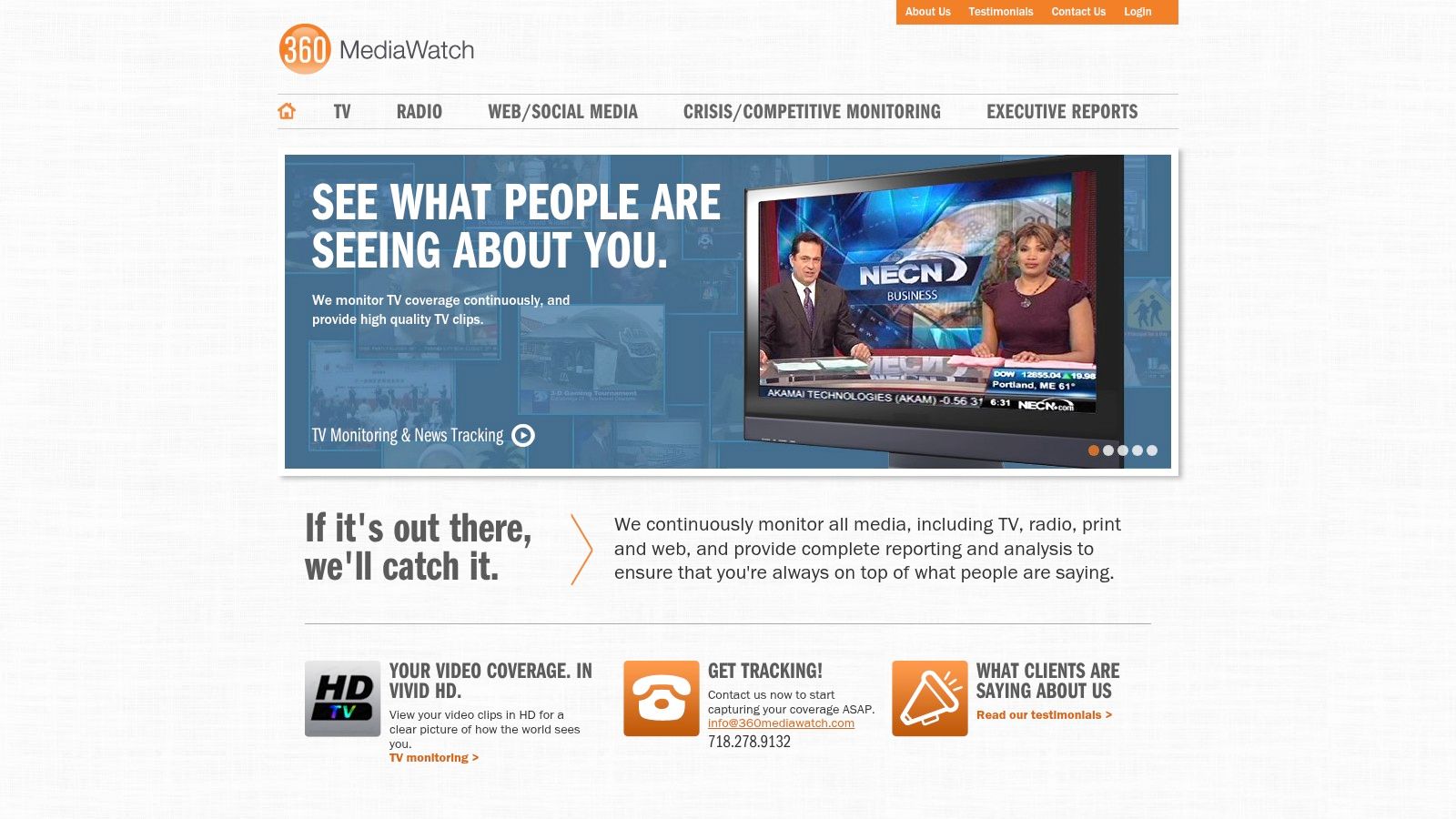
Broadcast evidence needs more than a mention count. A communications team may need the actual segment, the surrounding discussion, and a clip suitable for internal review. 360 MediaWatch combines print, television, radio, web, and social monitoring, making it relevant when broadcast sits alongside newspaper clipping.
The provider describes Spanish-language US broadcast monitoring and international monitoring through partners. Buyers should distinguish direct coverage from partner-delivered material because availability, retrieval, and delivery arrangements may differ.
Verify the station, not just the market #
For coverage channels, the evaluation should name stations, programs, languages, and relevant print titles. A market-level claim alone doesn't establish that a particular evening bulletin or local radio program is searchable.
- Search depth: Test spoken-name variants, abbreviations, and clips where the organization is discussed without its full formal name.
- Alert speed: Compare immediate delivery options with scheduled summaries, using the original airtime as the starting point.
- Reporting: Check whether the dashboard preserves clips, organizing labels, sharing controls, and archive references in exported reports.
A focused review of broadcast monitoring services can help teams define those requirements before requesting a quote.
The appeal is combined print and broadcast evidence within a shared workflow. Pricing remains quote-based, so buyers should establish whether clip access, archives, sharing, and partner coverage are included rather than discovering those boundaries after setup.
6. NewsPowerOnline #
A regional TV interview can require a response before a routine coverage digest arrives. NewsPowerOnline emphasizes broadcast clipping and alerts close to airtime, alongside print, internet, blog, and social monitoring.
That emphasis makes it a candidate for teams whose monitoring day starts with television and radio. Its advertised trial report and lack of a long-term contract requirement provide useful evaluation points, but the current commercial terms should be confirmed in the proposal.
Search depth should be tested through both fresh coverage and archived segments. A service that retrieves a known interview should also demonstrate whether it can find an unexpected mention, a shortened company name, or a spokesperson identified only by surname.
Operational test: Measure the interval from airtime to a usable clip, not merely the arrival of an alert.
- Coverage channels: Request confirmation of the actual stations and programs needed, including radio rather than assuming television coverage proves both.
- Alert speed: Inspect the notification, playable evidence, and surrounding context together. A fast message without accessible evidence leaves the verification work unfinished.
- Reporting options: Review portal searches, archive retrieval, report creation, and how audience metrics are labeled.
Pricing requires a customized quote. The main buying question is whether the broadcast workflow justifies the service for the team's actual markets, while the other channels provide useful consolidation rather than unnecessary scope.
7. Meltwater #
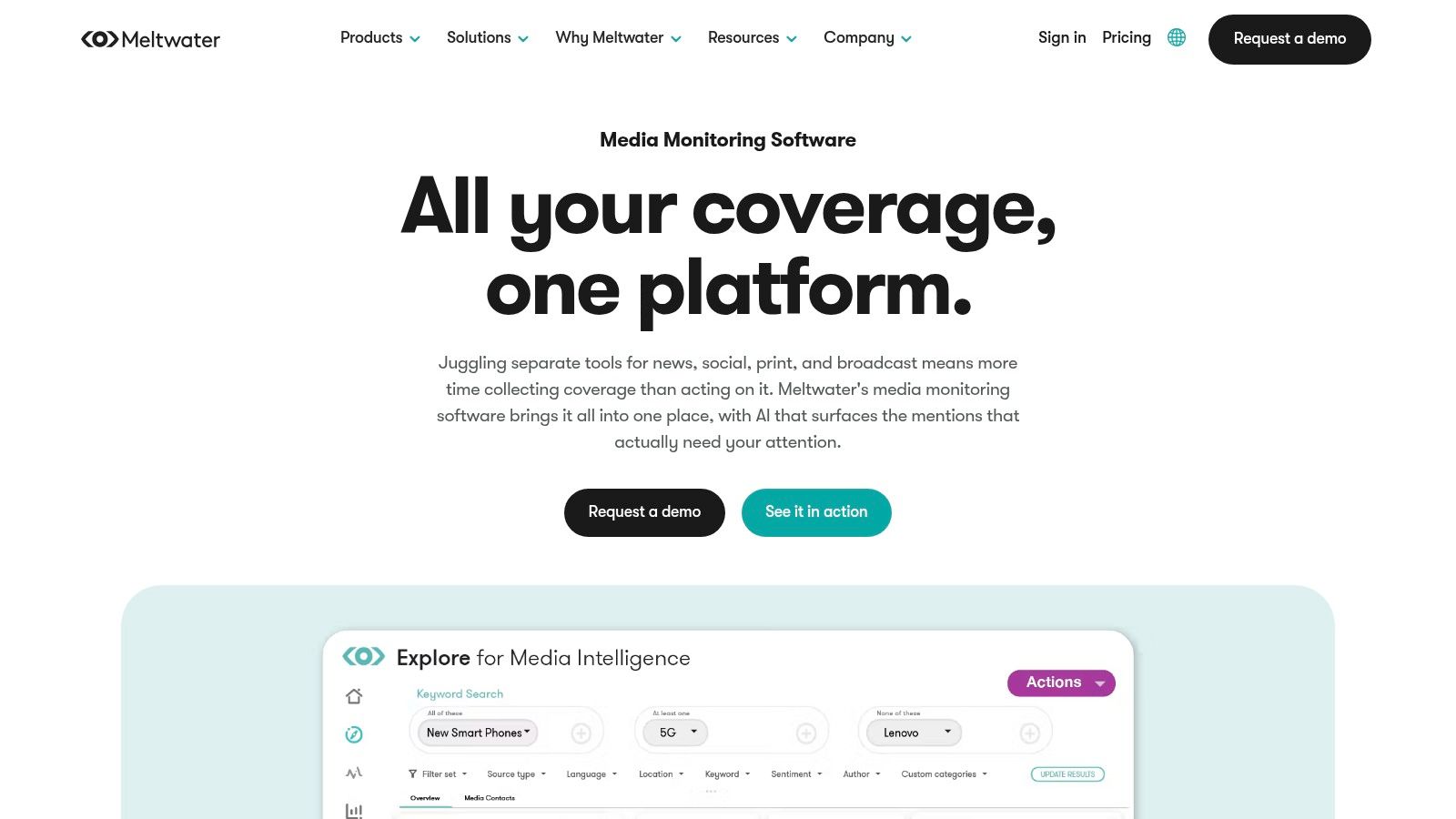
Meltwater belongs on the shortlist when clipping is part of a broader media-intelligence requirement. Its offering spans online news, social, print, broadcast, and podcasts, with search, alerts, analytics, and reporting.
The advantage is consolidation, particularly for teams tracking brands, competitors, and topics across markets. The disadvantage is that a broad platform may introduce costs and administration that a narrow clipping assignment doesn't need.
Evaluate depth within each channel #
A cross-channel dashboard shouldn't be mistaken for identical access everywhere. Buyers should confirm which print titles, broadcast sources, podcast content, languages, and historical material are included in the proposed package.
Search and retrieval should be tested separately for each important format. Finding a web headline doesn't demonstrate the ability to retrieve a print-only article or locate a spoken mention inside an episode.
- Alert speed: Ask for channel-specific delivery expectations and test them during the evaluation. Aggregated alerts can conceal different source-processing schedules.
- Reporting: Examine trend comparisons, source filters, duplicate handling, and exports that preserve the underlying evidence.
- Pricing: The quote should itemize source access, social-listening scope, users, integrations, and reporting requirements.
Meltwater is a stronger candidate when staff will actively use its wider intelligence features. A team collecting a small set of newspaper clips should compare the total operating burden, not just the appeal of having more tools available.
8. CisionOne #
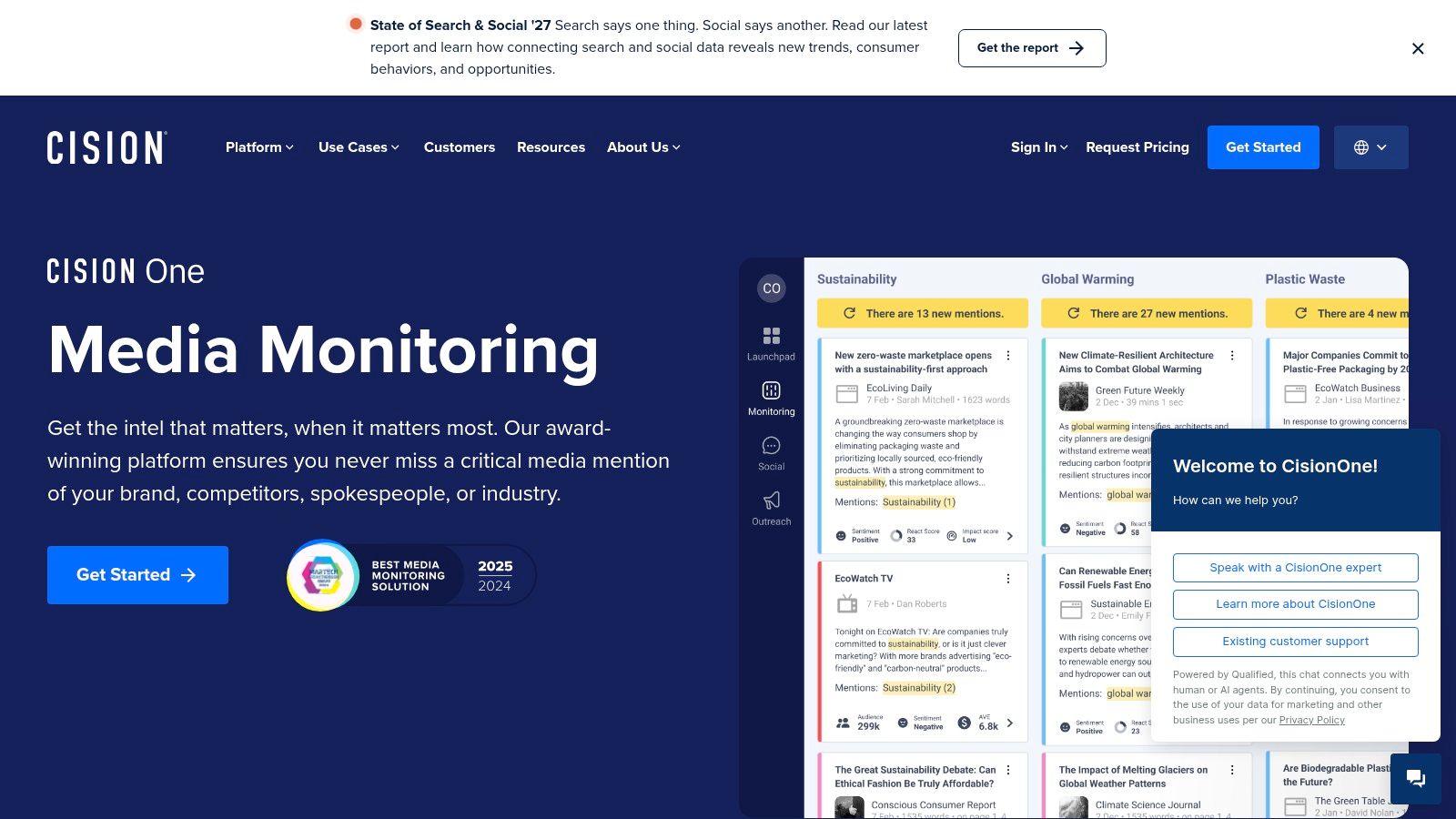
For teams already using related media-relations or distribution tools, CisionOne's monitoring offering deserves an operational comparison. It spans online, print, broadcast, podcasts, and social media, with alerts and report-sharing capabilities.
The potential benefit is a connected PR workflow rather than clipping in isolation. The risk is buying a broader platform when the actual requirement is reliable retrieval and evidence preservation.
Start with the report destination #
Before a demonstration, the team should define what its media coverage report must contain. That makes it easier to judge whether the platform supplies verifiable clip evidence or requires substantial manual cleanup.
Coverage and search depth should be evaluated against brands, competitors, spokespeople, and industry topics. Buyers should inspect source-level access and licensing, especially where premium material or broadcast clips are involved.
- Alert speed: Test real-time alert claims against publication timestamps and confirm which source types qualify.
- Reporting options: Examine shared reports, export fields, and whether recipients can access the evidence without additional accounts.
- Integration and retention: REST API access is described in the monitoring FAQs, but availability, permissions, and retention terms belong in the commercial discussion.
Standard pricing isn't published. Teams should request a proposal tied to their required channels and workflows, then compare that cost with the manual work removed. Existing ecosystem use is a reason to evaluate fit, not a reason to skip coverage testing.
9. Agility PR Solutions #
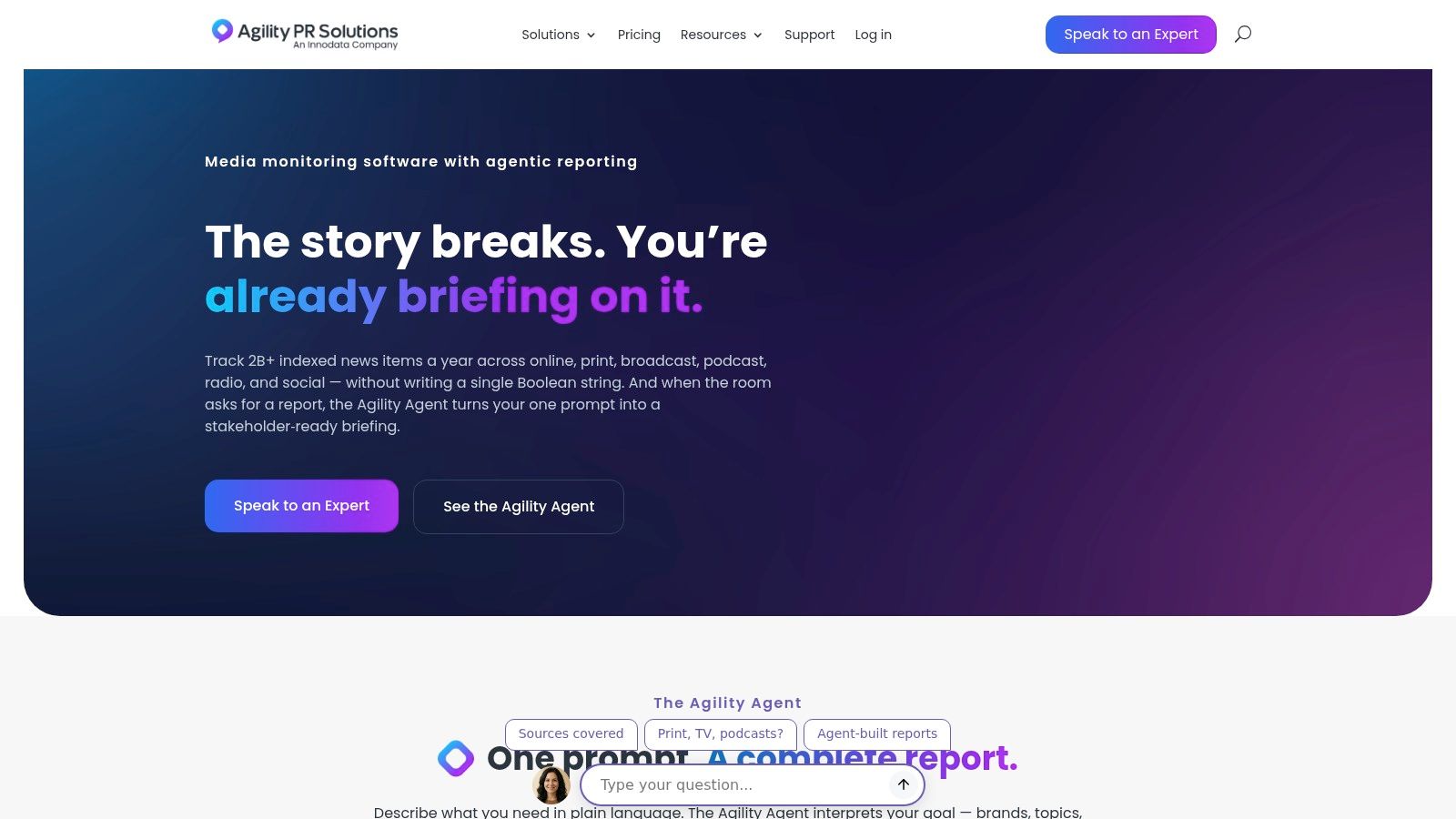
Raw matches and an executive briefing are different deliverables. Agility PR Solutions offers monitoring within a wider PR platform, with managed services that can add analyst input, curated briefings, and customized reporting.
Its coverage options include online, print, broadcast, podcast, radio, and social content. The useful distinction is between access to a platform and responsibility for producing a finished report. Agencies should establish which tasks remain with account teams after managed support is added.
Search depth should be tested with brand names, competitors, topics, and regional variations. AI-assisted coverage analysis should also be reviewed against source material, particularly where sentiment depends on sarcasm, quotations, or a disputed claim.
- Coverage channels: Confirm required premium publications, print sources, and markets within the proposed package.
- Alert speed: Separate automatic notifications from analyst-curated briefings. Each serves a different response requirement.
- Reporting options: Compare self-service exports with managed reports, including review processes and the ability to correct classifications.
Pricing depends on scope and requires a quote. Buyers should identify any additional source or licensing charges and specify the work included in analyst support.
Agility is a practical candidate when a team needs both tools and help interpreting coverage. It may be excessive for a simple clipping brief whose users already have a reporting process and only need dependable source retrieval.
10. Onclusive #
The first decision with Onclusive is who will operate the monitoring workflow. Its self-service and managed options cover print, online news, broadcast, and social media, allowing teams to compare internal operation with prepared briefings and expert support.
Self-service suits teams with clear search ownership. Managed monitoring may fit teams that need a prepared press review, but the handoff still requires explicit relevance rules and an agreed reporting brief.
Compare the operating models #
For search depth, buyers should test saved searches, historical retrieval, and how queries behave across media formats. Its Wordplay tool supports broadcast clip editing, which is worth examining when teams need a focused segment rather than an entire program.
- Coverage channels: Validate specific titles, stations, markets, and languages instead of selecting a package from aggregate coverage claims.
- Alert speed: Establish the difference between automated alerts and managed briefing delivery, including urgent escalation arrangements.
- Reporting options: Inspect evidence links, archive access, clip editing, and export formats under the intended operating model.
Onclusive emphasizes copyright compliance and licensed-content support. Buyers should translate that into concrete permitted uses for internal sharing, client reporting, and retained clips rather than assuming all content has identical rights.
Public standard pricing isn't displayed, so a demo or quote is necessary. The strongest fit is a team deliberately choosing between self-service and managed monitoring, not one seeking only occasional newspaper clippings.
Press clipping services compared #
| Item | Media coverage | Search & alerts | Reporting options | Pricing |
|---|---|---|---|---|
| Podzone (recommended) | 75,000+ English-language podcasts; 20,000+ new episodes daily | Search timestamped transcripts; mention alerts via webhooks and hourly email digests | Shareable excerpts; REST API and MCP server | Free plan and paid plans |
| Newz Group | US print, including regional and rural newspapers; online, broadcast, and social | Keyword and full-text search; filtering | Newspaper PDFs; centralized coverage platform | Quote required |
| Presswire | Print, online, paywalled, and selected broadcast sources | Monitoring for up to two keywords on ongoing plans | Daily, fortnightly, or monthly reports; retrospective retrieval | $235 for one month after a release; $320/month for up to two keywords, excluding VAT |
| News Exposure | Print, online, social, and broadcast | Searchable clippings | Archives, sharing, regular reports, and media analysis | Quote required |
| 360 MediaWatch | Print, TV, radio, web, and social; includes Spanish-language US broadcast monitoring | Alerts with immediate or scheduled delivery | Dashboard to organize, share, and archive coverage | Quote required |
| NewsPowerOnline | TV, radio, print, internet, blogs, and social; TV coverage claimed across 210 US markets | Search archived coverage; alerts close to airtime | Portal for reporting; complimentary trial report advertised | Customized quote |
| Meltwater | Online news, print, TV, radio, podcasts, and social; global and multilingual coverage | Search and alerts for brands, competitors, and topics | Analytics and reporting for coverage trends and comparisons | Quote-based |
| CisionOne | Online, print, TV, radio, podcasts, and social | Real-time alerts for brand, competitor, spokesperson, and industry mentions | Report-sharing options; REST API access | Quote required |
| Agility PR Solutions | Online, print, broadcast, podcasts, radio, and social | Monitoring for brands, competitors, topics, and regions | Reporting tools, AI-assisted analysis, and managed briefings | Quote-based |
| Onclusive | Print, online news, broadcast, and social | Saved searches, alerts, and historical search | Self-service reporting or managed briefings; broadcast clip editing | Demo or quote required |
Matching the Service to Your Coverage Reality #
The best press clipping service matches the coverage that matters, not the longest feature list. If important discussion happens inside podcasts, Podzone's timestamped transcripts and mention alerts are a direct fit. If regional print drives public affairs or client visibility, a specialist such as Newz Group can justify a more involved quote process.
For organizations needing broader consolidation, Meltwater, CisionOne, Agility, and Onclusive should be evaluated against actual channel requirements. Presswire, News Exposure, 360 MediaWatch, and NewsPowerOnline warrant consideration where focused clipping, managed support, or broadcast retrieval better matches the work.
Require evidence before committing #
Reporting quality should carry as much weight as source breadth. In a survey of PR managers in Germany, Austria, and Switzerland, over half produced clipping reports with PowerPoint, Excel, or Word, according to aclipp's report on clipping workflows. A replacement service should remove identifiable preparation tasks rather than merely supply more material to paste into slides.
The reporting standard should also distinguish outputs from outcomes. Mentions, publication prominence, and estimated reach describe coverage; they don't independently establish awareness, leads, or reputation change. Only about 40% of practitioners reported being very confident in the metrics they provide, according to the PR and Earned Media Measurement report.
- Build a known-coverage sample: Include relevant articles, print-only coverage, broadcast segments, and podcast passages from the titles and markets that matter.
- Test retrieval and relevance separately: Record missed coverage and irrelevant matches rather than combining both into a vague accuracy judgment.
- Measure usable delivery: Track when the evidence becomes available, not just when a notification arrives.
- Inspect the final report: Require source context, dates, excerpts, access rules, duplicate handling, and clear labels for estimated metrics.
More clips aren't automatically better evidence. A smaller, relevant set that an executive can verify may support a better decision.
Commercial review comes after the coverage test. The proposal should make source access, retention, permitted sharing, reporting support, integrations, and cancellation terms explicit.
Before any commitment, the team should validate coverage with a trial or sample report against its specific publications, shows, stations, languages, and markets. That test provides a firmer basis for selection than a polished demonstration or an impressive coverage total.
Teams that need podcast evidence can use searchable transcripts, timestamped passages, and keyword alerts to turn audio mentions into verifiable coverage. Podzone also connects sponsor, host, and guest research with API and webhook access, and its free plan offers a starting point for testing relevant shows and monitoring rules.
- press clipping service
- media monitoring
- press clipping tools
- PR monitoring
- media coverage tracking