Broadcast Monitoring Services: 10 Tools Compared for 2026
Compare 10 broadcast monitoring services on podcast coverage, transcript search, alert speed, and reporting, with honest limits for PR and research teams.
A PR manager gets a late-afternoon message from a client asking whether the company was discussed on a popular podcast that morning. The episode is available, but its description doesn't mention the brand. Someone needs to find the passage, understand the context, and send evidence before the executive briefing.
Podcast audio doesn't behave like a web page. A service must discover the episode, process its audio, identify the relevant words, and deliver a result that someone can verify. A large podcast directory alone won't answer the client's question.
Broadcast monitoring services differ most at those handoffs. Some combine podcasts with television and radio; others concentrate on podcast transcripts, sponsorship intelligence, or developer access. This comparison judges each service against the same practical criteria: podcast coverage, transcript search, alert speed, and reporting.
Vendor coverage totals and latency claims belong in a trial, not a purchasing assumption. The useful test is whether a service finds the shows that matter, catches the actual mention, and produces evidence a client or executive can review.
Table of Contents #
- 1. Podzone
- 2. TVEyes
- 3. Critical Mention
- 4. CisionOne
- 5. Muck Rack
- 6. Podscan
- 7. Pod Engine
- 8. Audioscrape
- 9. TrackPodcasts.com
- 10. Particle Data Platform
- How the ten broadcast monitoring services compare on coverage, search, alerts, and pricing visibility
- Choosing Among Broadcast Monitoring Services for Your Workflow
1. Podzone #
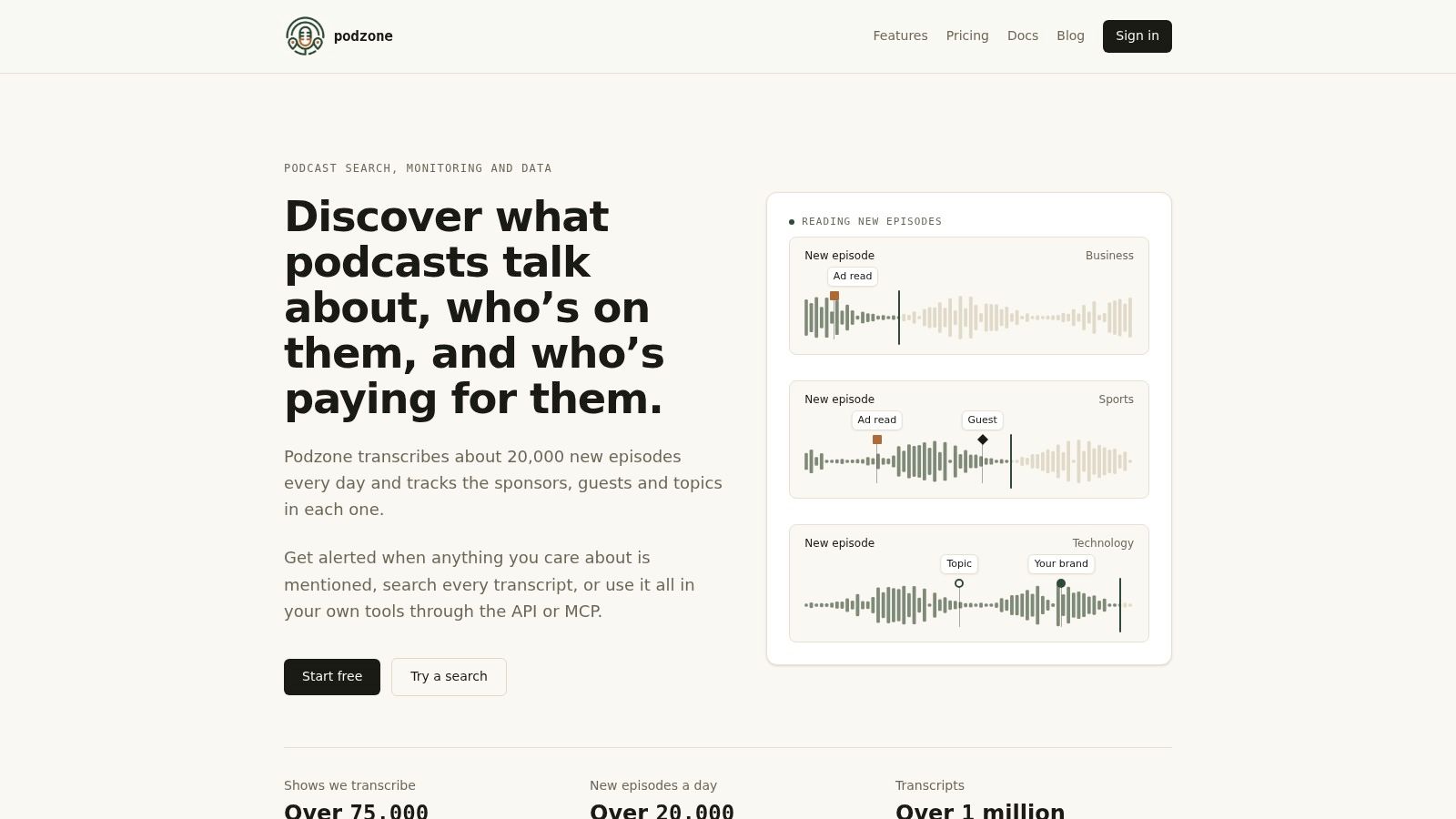
Podzone suits teams that need podcast evidence and structured research in the same workflow. It ingests publicly published podcast feeds, transcribes episodes, and watches new transcripts for brand names, competitors, people, or topics.
Its usefulness extends beyond finding a mention. Sponsor records, ad reads, offer codes, and host and guest information support competitive research, podcast booking, and advertising analysis without requiring a separate discovery process.
Coverage, Search, Alerts, and Reporting #
- Podcast coverage: The service tracks over 4 million feeds and adds about 30,000 new episodes daily. Those figures describe ingestion scale, not a guarantee that every feed has complete searchable history; coverage and latency are targets rather than commitments.
- Transcript search: Full-text results deep-link to the exact audio moment. Transcripts can be read or downloaded, making it easier to validate wording before a passage enters a client report.
- Alert speed: Processing latency is measured in minutes. Assigned recipients receive hourly email digests, while signed webhooks push each match seconds after detection. Detection speed and notification delivery aren't the same measurement.
- Reporting: Mention evidence combines transcript context, show and episode details, and a timestamp. The API supports searches, transcripts, sponsors, people, and alerts for teams building their own reporting workflows.
The main trade-off is channel scope. This is podcast monitoring, not a substitute for full television and radio coverage. Multilingual teams should also establish which required languages and shows have usable transcripts before relying on it.
Every plan includes alerts, search, transcripts, sponsors, people, and API access, with a free plan available. The MCP server also supports assistant-based podcast research, while signed webhooks suit teams that need findings delivered directly into existing systems.
2. TVEyes #
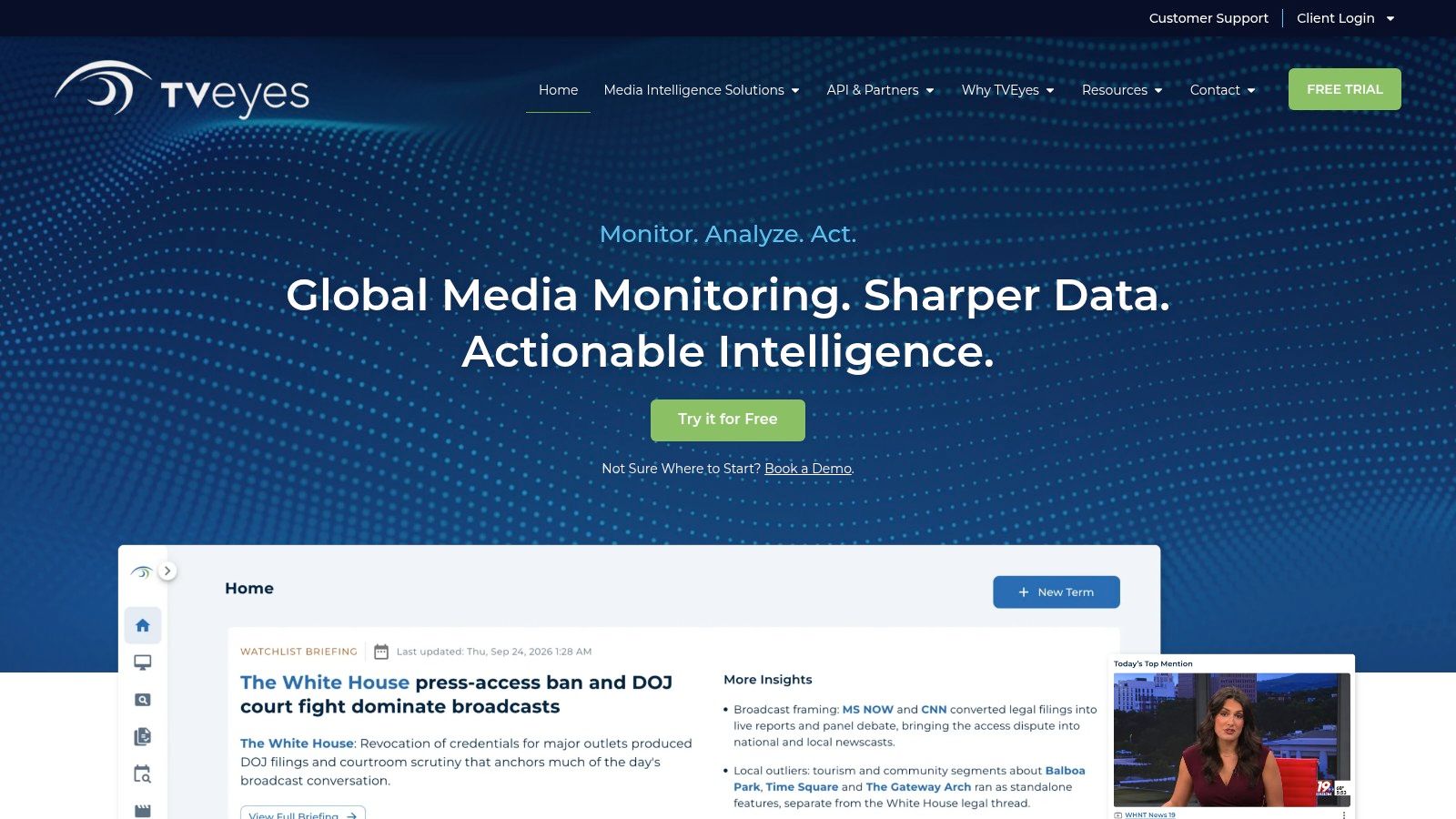
A communications team handling regional radio interviews, television appearances, and podcast coverage needs a different starting point from a podcast advertising researcher. TVEyes fits the cross-channel requirement, combining TV, radio, podcasts, and online video in its Insight platform.
Searchable transcripts, alerts, and clips support the familiar PR sequence of finding coverage, checking context, and sharing evidence. Broadcast station and program information adds context that a podcast-only search tool won't supply.
- Podcast coverage: Podcasts sit alongside traditional broadcast and online video. Priority-show availability should still be demonstrated rather than inferred from the platform's wider channel coverage.
- Transcript search: Keyword searches and searchable transcripts support passage-level review. A useful demonstration should include an unusual brand spelling and a mention buried inside a longer discussion.
- Alert speed: Alerts are available, but a reliable publication-to-notification interval isn't established here. A timed trial should separate capture, transcription, matching, and delivery.
- Reporting: Clips and source context support coverage reports, while podcast listenership information can help describe potential exposure. Audience estimates shouldn't be presented as confirmed listeners to a particular mention.
Buying rule: A searchable clip isn't automatically cleared for public republication. Clip-sharing and reuse permissions belong in the contract review.
API access supports integrations, but buyers should establish which content and fields their agreement includes. Sponsor-history analysis isn't a highlighted strength. Pricing is quote-based, so the purchasing comparison needs a defined scope covering users, regions, and expected data volume.
3. Critical Mention #
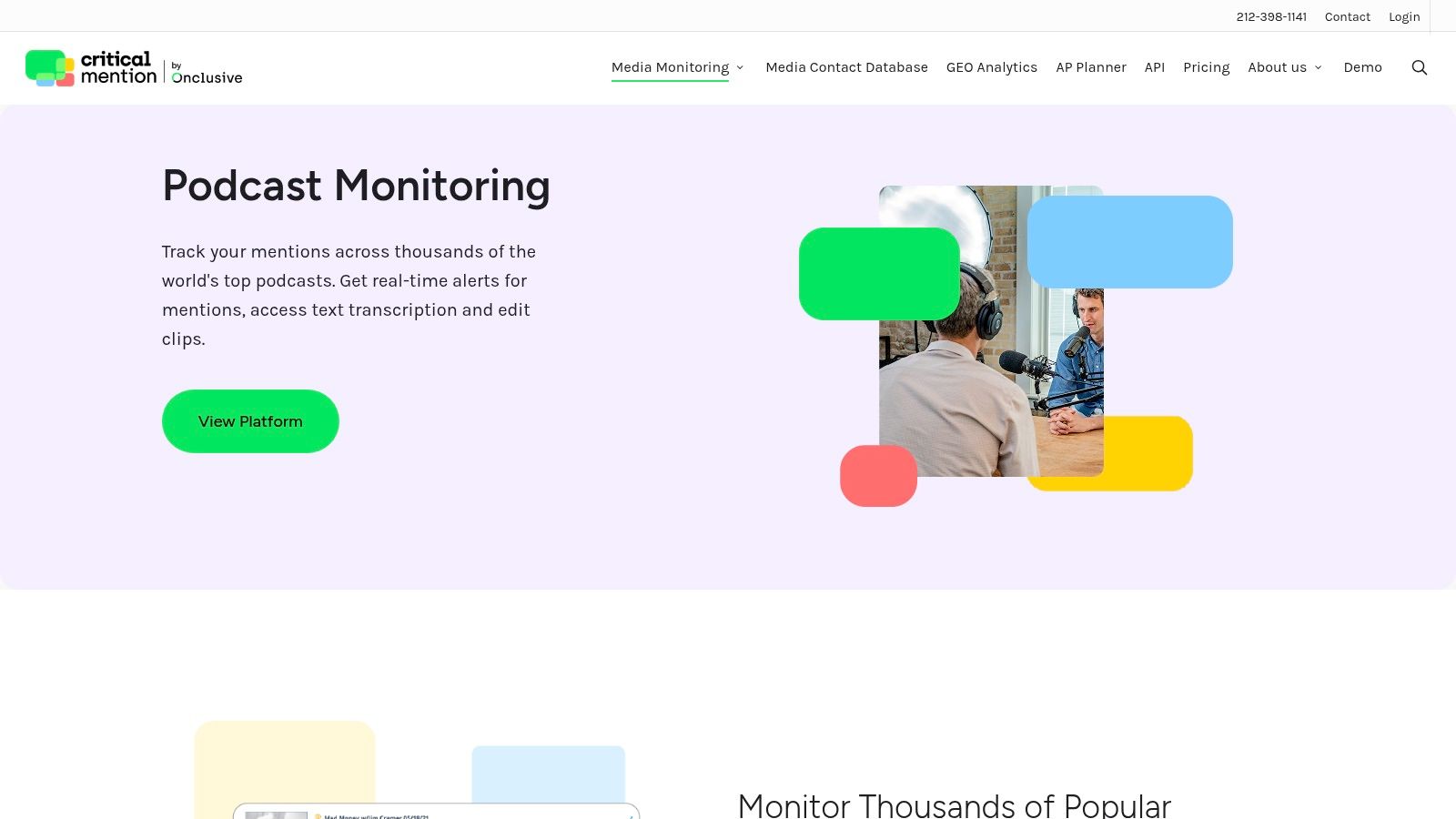
The reporting handoff is a strong reason to consider Critical Mention. Its podcast monitoring sits within an earned-media platform that combines broadcast, online, and social-media analysis.
For an agency already assembling mixed-media coverage reports, that arrangement can reduce the need to reconcile findings from unrelated systems. Transcript and clip tools, including clip editing, help turn a search result into something suitable for review.
Where It Fits the PR Workflow #
Podcast coverage should be tested against a named show list. A broad earned-media platform can still miss a specialist industry podcast, so the demonstration should include niche programs rather than only prominent interview shows.
Transcript search uses speech-to-text content to find mentions. Review should include surrounding dialogue, because a passing reference, an endorsement, and a criticism shouldn't receive the same treatment in a report.
- Alert speed: Real-time and digest alert options are described. The real-time label should be tested against episode publication and actual receipt, not treated as a guaranteed turnaround.
- Reporting: Saved or edited clips, transcripts, sentiment analysis, and broader media analytics support client-facing reporting. Human review remains important when sarcasm or quoted criticism affects the interpretation.
Training and dedicated account support may matter more to a busy agency than another search filter. However, pricing isn't publicly listed, and sponsor intelligence, guest-history research, and developer-data access aren't highlighted in the product description. Those capabilities shouldn't be assumed to come with the broader platform.
4. CisionOne #
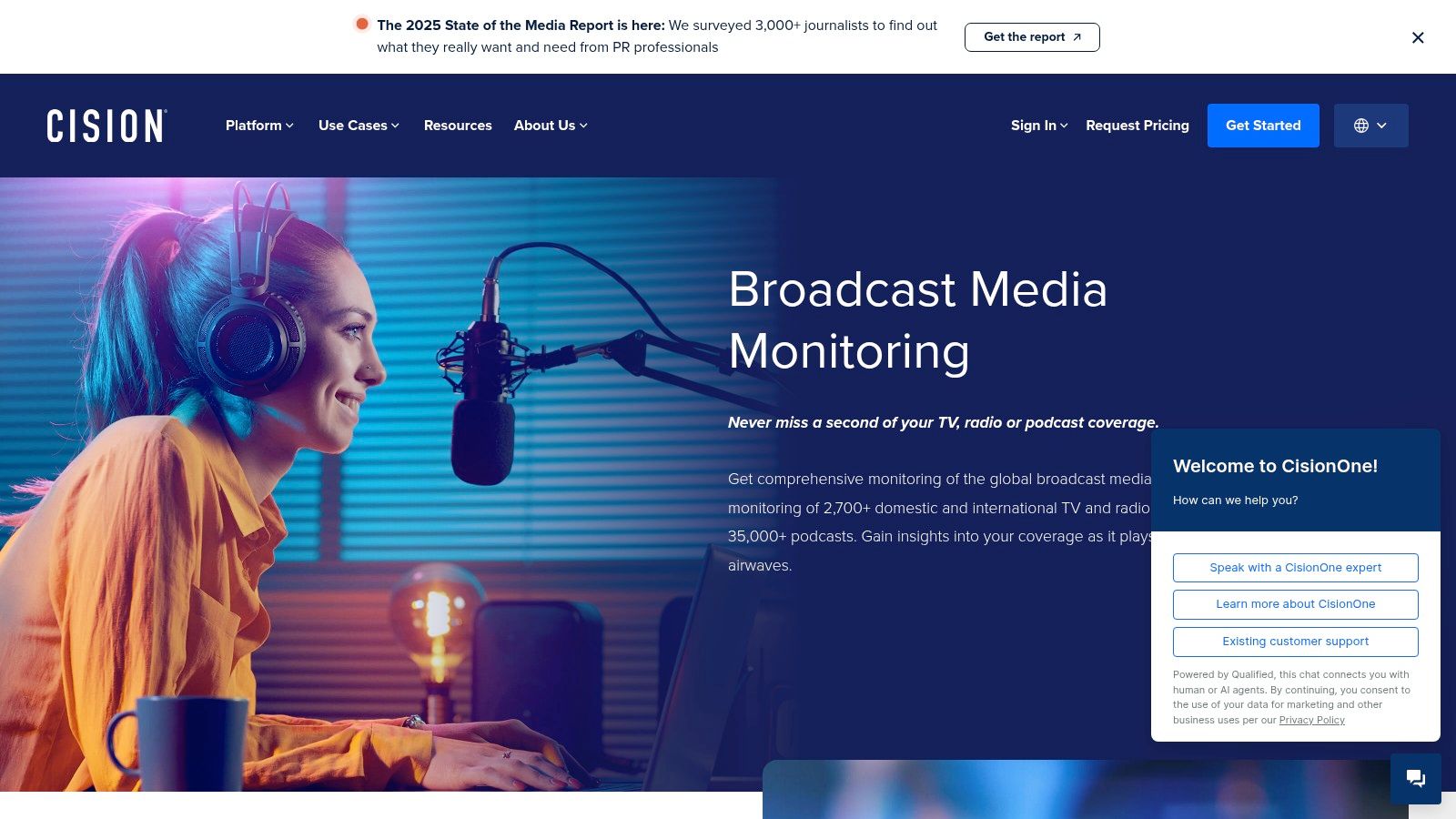
CisionOne makes the most sense when broadcast monitoring belongs inside a larger communications program. Its TV, radio, and podcast monitoring supports organizations that need to compare coverage across media types rather than maintain a podcast-only watchlist.
The attraction is consolidation: transcript searching and coverage analysis can sit beside sentiment, geography, and share-of-voice reporting. The trade-off is that a broader platform may be unnecessary for a team that only needs keyword alerts from selected podcasts.
- Podcast coverage: Podcast monitoring accompanies domestic and international broadcast coverage. Buyers should establish both show availability and searchable episode history.
- Transcript search: Broadcast transcript searching helps locate relevant speech. A trial should verify whether podcast results provide enough surrounding context to distinguish a company mention from an unrelated use of its name.
- Alert speed: No comparable end-to-end podcast latency is established here. A live demonstration should use recently published material, not just archived examples.
- Reporting: Coverage, sentiment, geography, and share of voice suit communications measurement. A consistent media coverage report should still distinguish source evidence from estimated exposure and automated interpretation.
The Enterprise Trade-Off #
Organizations already using the platform may value keeping monitoring and measurement together. Teams without that existing requirement should compare the total workflow, including setup and report preparation, against a narrower service.
Pricing requires a sales conversation. Sponsor and offer-code intelligence aren't highlighted, and developer access shouldn't be assumed from the presence of analytics dashboards.
5. Muck Rack #
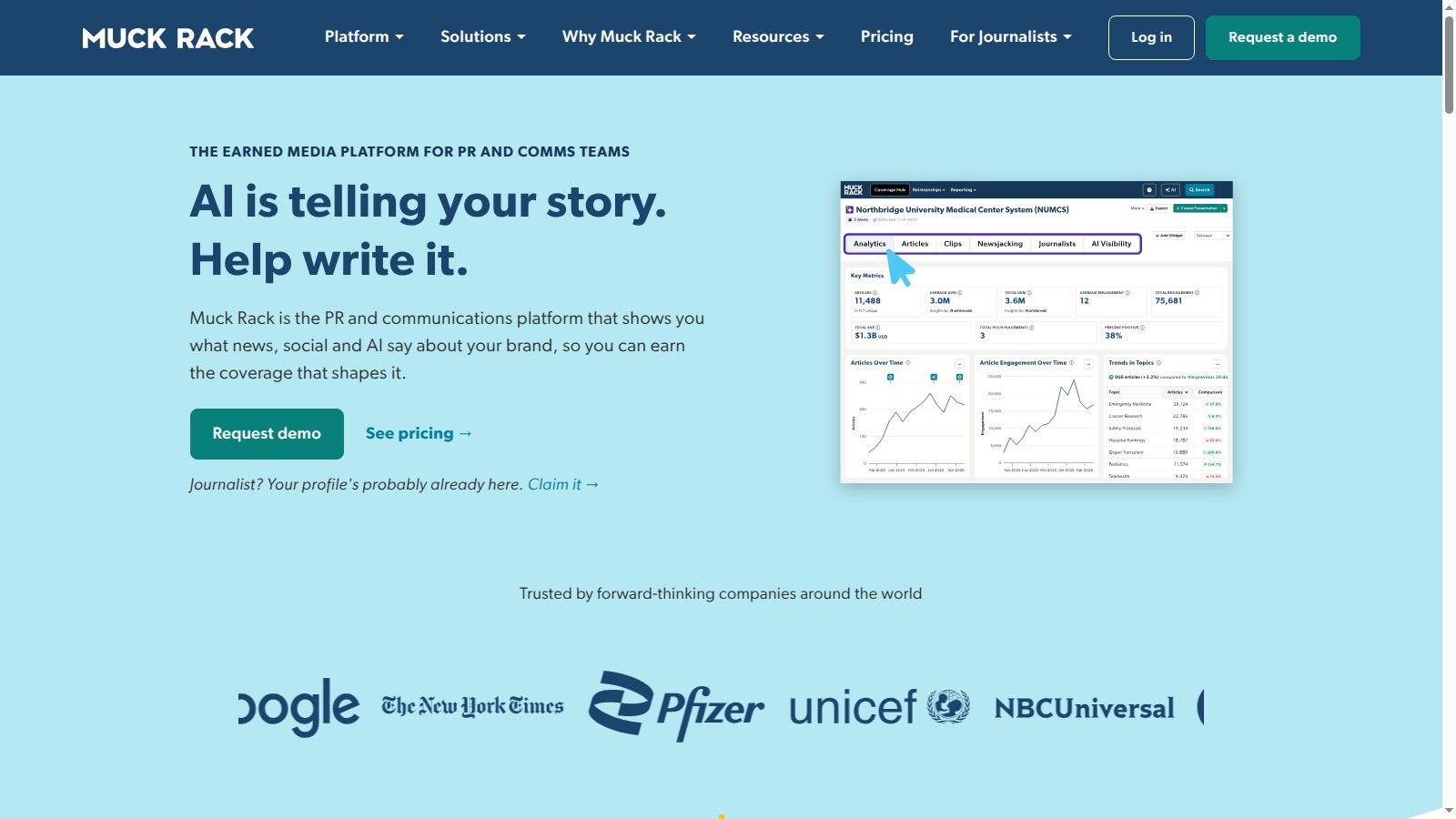
Finding a mention can create an outreach opportunity. Muck Rack connects podcast monitoring with media research and outreach, making it relevant to teams that want to investigate the host or show after discovering coverage.
Its podcast tools include transcript and episode searches, Podcast Trackers, and alerts. Episode pages provide transcript context and an audio player, which helps a publicist check what was said before planning follow-up.
A podcast directory entry proves that a show is indexed. It doesn't prove that the show's spoken content is searchable.
That distinction is central to evaluating Muck Rack. Full searchable English transcripts cover only part of its wider podcast database, and premium podcasts and some platform exclusives are excluded.
- Podcast coverage: Confirm transcript availability for required shows, not merely their presence in search results.
- Transcript search: Searchable English transcripts, episode details, and host or guest names support both mention discovery and research.
- Alert speed: Podcast Trackers provide monitoring and notifications. A trial must establish how quickly a newly published episode becomes searchable and triggers an alert.
- Reporting: Episode context and audio playback support validation, while the wider PR platform connects findings with media lists and outreach activity.
Podcast monitoring is described as included in Standard and Premier plans, but pricing isn't presented as a simple public list. Sponsor-history research isn't the principal use case, and transcript export rights or developer access need separate confirmation. The strongest fit is a PR team that values the connection between monitoring and relationship research.
6. Podscan #
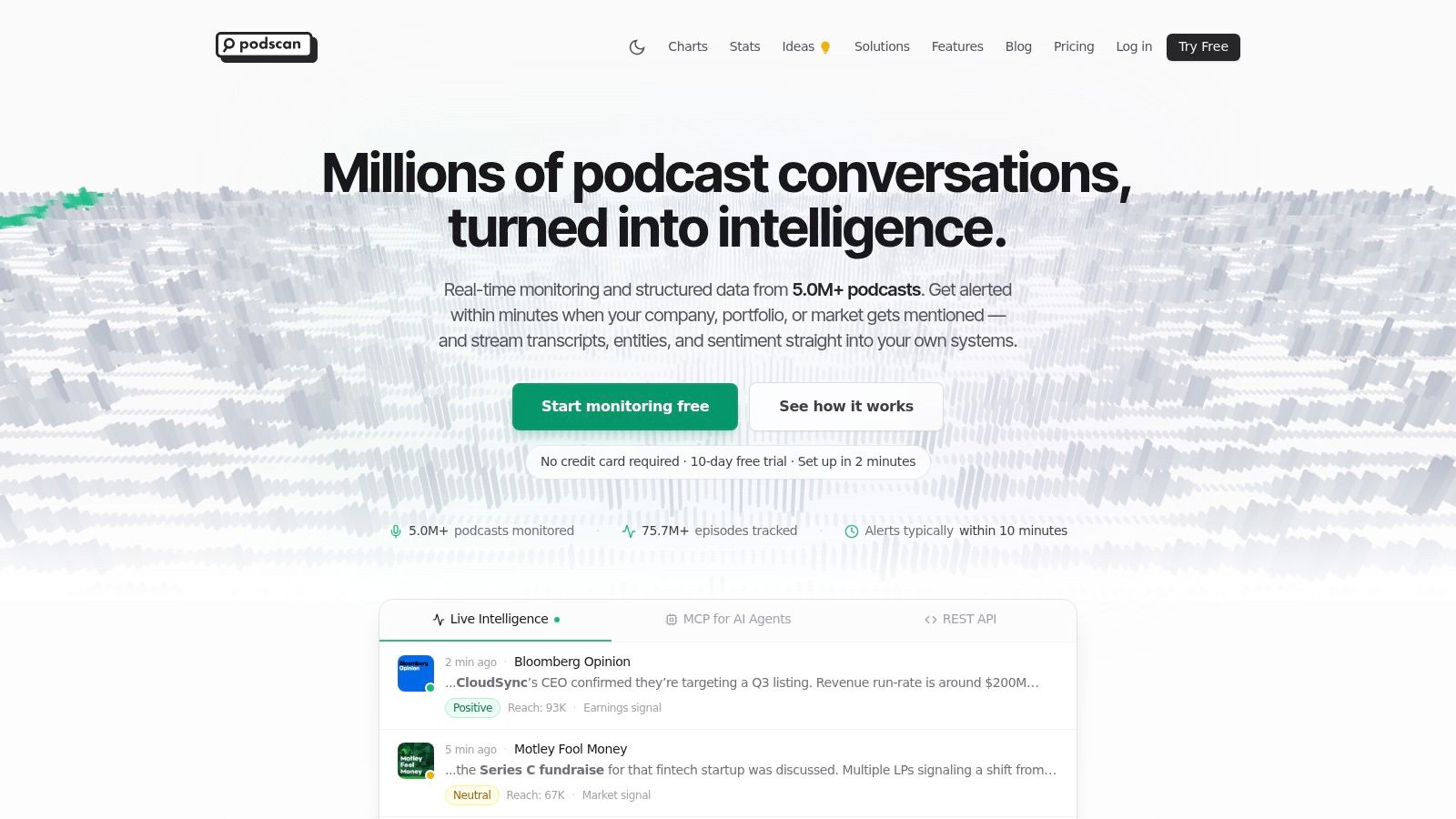
Podscan offers a choice between dashboard-based monitoring and programmatic podcast intelligence. Its Brand Console supports brand, competitor, and keyword alerts, while API, MCP, and Firehose options address teams building their own applications or data workflows.
That flexibility is useful, but it makes plan evaluation more important. A dashboard subscription and high-volume data access shouldn't be treated as equivalent purchases.
Evaluate the Access Model First #
Podcast coverage depends on the selected plan and access tier. A buyer should establish whether the required shows, historical episodes, and data fields are available within the proposed subscription, rather than evaluating the catalog in isolation.
Transcript search includes full-text searching, with reporting and exports available for moving findings into other systems. Sponsor and audience-related data broaden the service beyond simple mention detection.
- Alert speed: Email and webhook alerts support different operational needs. A webhook's availability doesn't establish how quickly the underlying episode is discovered or transcribed.
- Reporting: Exports and integrations support recurring analysis. A trial should produce an actual deliverable, such as a competitor mention summary with timestamped supporting passages.
For teams connecting discovery to podcast PR, the practical question is whether findings include enough context for informed follow-up. TV and radio monitoring isn't the stated focus, and content reuse rights still need review.
7. Pod Engine #
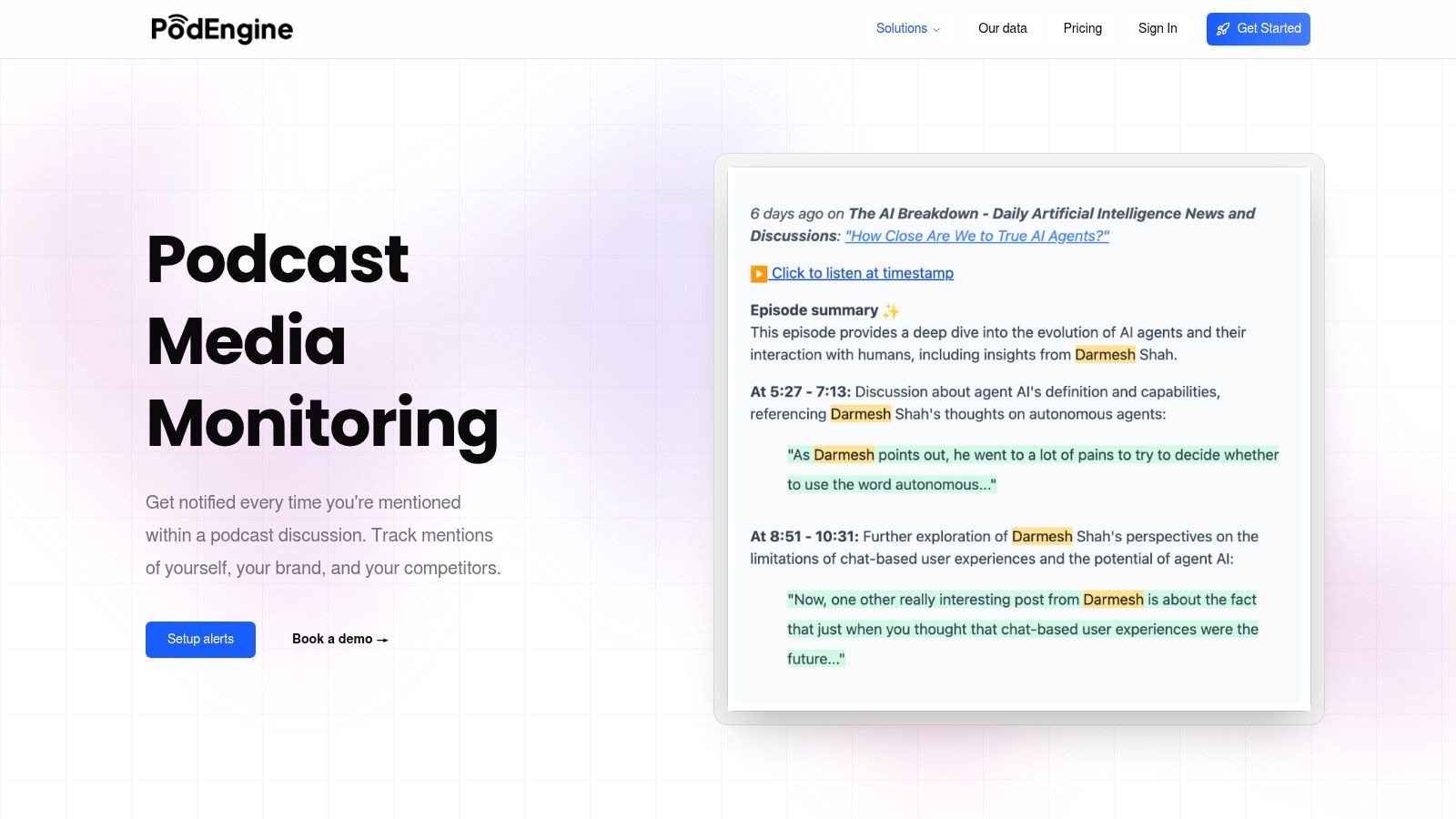
A booking team may need to know both where a competitor appeared and whom to contact next. Pod Engine combines mention monitoring with show discovery, contact information, and audience-related research.
That combination suits publicists and agencies that want to move from listening intelligence into prospect research. A team seeking only a basic mention inbox may find the broader research platform unnecessary.
- Podcast coverage: The service transcribes selected shows, so directory coverage shouldn't be mistaken for uniform transcript coverage. Priority feeds need an explicit availability check.
- Transcript search: Monitoring results include context and timestamped clips. A trial should establish searchable history and how well searches handle brand variants, product names, and ambiguous terms.
- Alert speed: Hourly, daily, or weekly schedules are described, but buyers should distinguish the selected delivery schedule from episode-processing latency.
- Reporting: Timestamped evidence and contact details support actionable findings. Buyers should test how easily those findings become a client-ready export or recurring report.
Discovery Versus Continuous Monitoring #
Published Core Platform and Agency pricing helps buyers start a comparison, but alert allowances and plan limits matter for agencies managing multiple brands. A contact database is valuable only if the monitoring component reliably catches the conversations that drive outreach decisions.
API or MCP access can support custom research workflows. Sponsor-history analysis and traditional TV and radio coverage aren't established strengths in this description. The best trial combines a known past mention, a newly released episode, and a realistic follow-up task rather than relying on a catalog demonstration.
8. Audioscrape #
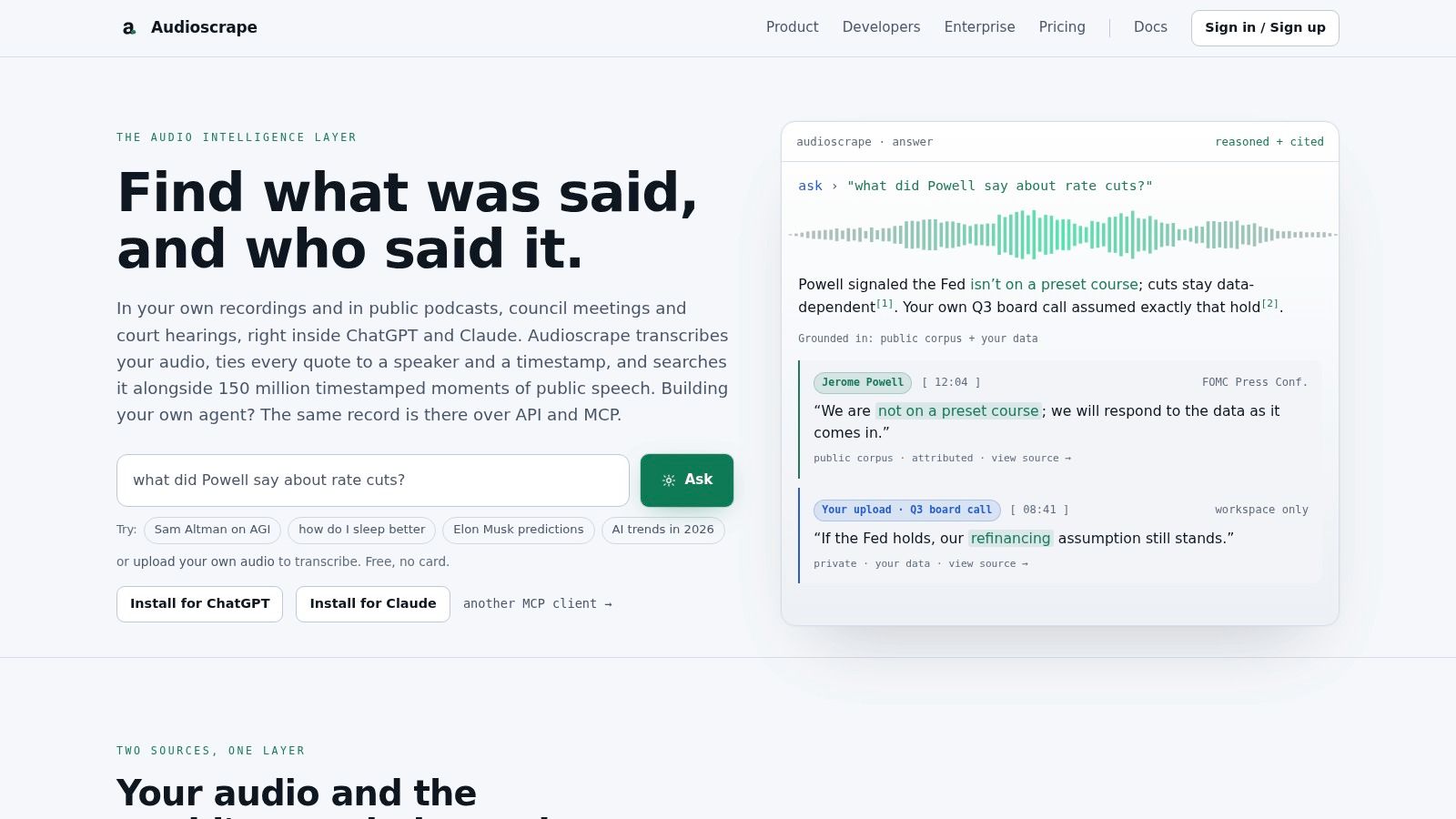
Audioscrape is useful when the monitoring task includes audio outside an existing podcast index. Alongside podcast search and alerts, it supports followed RSS feeds and uploaded recordings.
That makes it relevant to researchers working with a mixture of public episodes and recordings they're entitled to process. Upload capability, however, isn't the same as continuous monitoring of a television or radio channel.
Podcast coverage includes indexed episodes and followed feeds. The evaluation should establish what following a feed changes, particularly whether historical episodes are processed and how allowances apply.
Transcript search provides snippets, timestamp-linked results, and speaker information. Those features can reduce review effort, but names spoken over background noise or overlapping dialogue still need audio verification.
- Alert speed: Alerts cover newly indexed podcasts and other supported recordings. Publication-to-indexing time should be measured separately from notification delivery.
- Reporting: Snippets and audio links support evidence sharing, while API, MCP, and webhook options enable custom workflows. Buyers should test the export format rather than assume a finished PR report is included.
A free plan and public paid tiers make an initial evaluation accessible. Transcription and search allowances vary by plan, so a realistic trial should include the volume and recording lengths the team expects to handle.
Sponsor-history and advertising-market analysis aren't the main emphasis. Audioscrape's stronger distinction is flexible audio ingestion paired with search, not a complete replacement for a cross-channel communications platform.
9. TrackPodcasts.com #
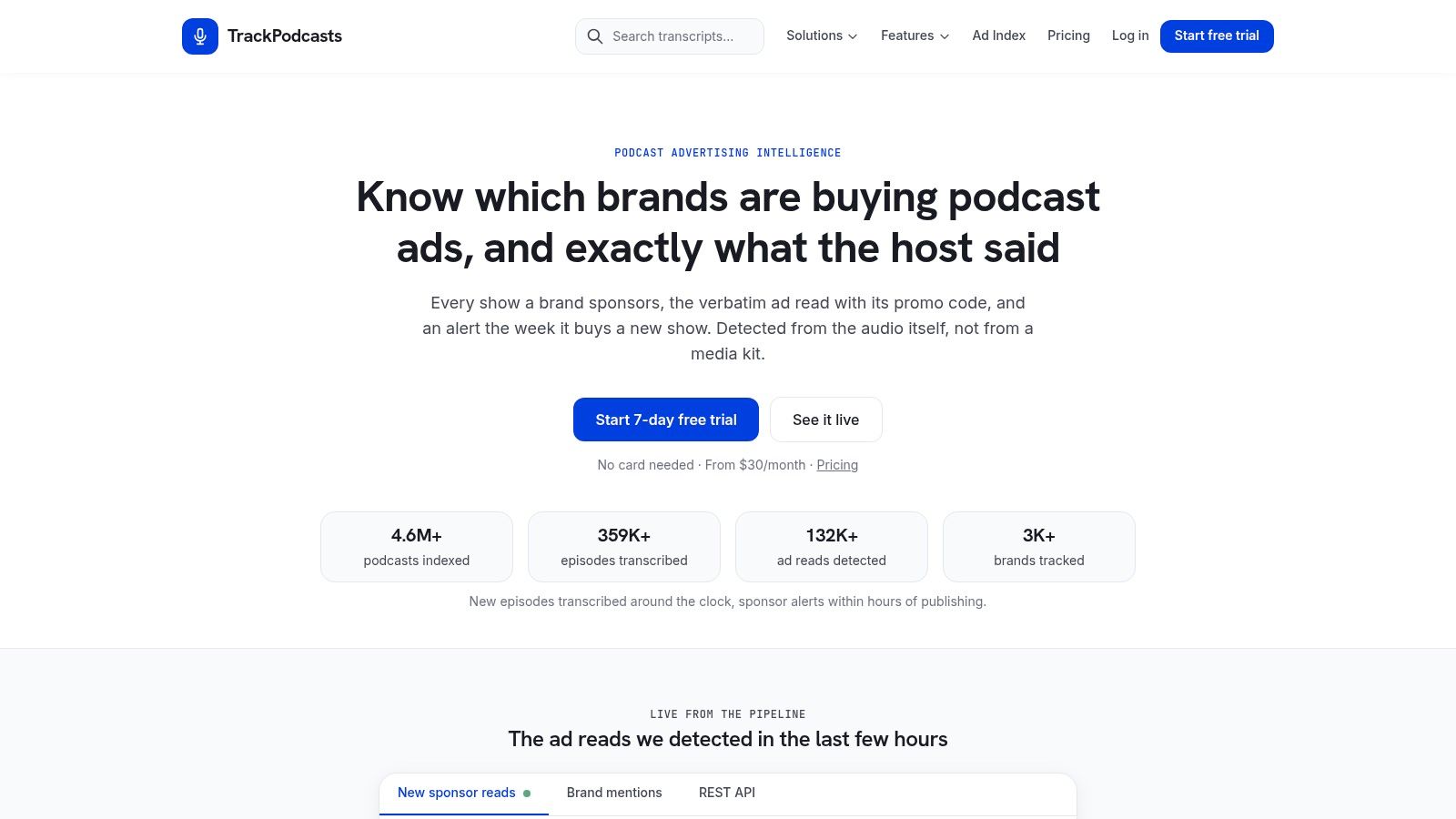
For an advertising team, a brand mention and a paid ad read are different findings. TrackPodcasts.com emphasizes sponsorship and ad-read research, alongside podcast brand monitoring.
Sponsor records include ad-read text, timestamps, promo codes, and ad-type information. Those details help buyers investigate placements and offers rather than merely count how often a brand name appears.
Evidence boundary: An observed podcast ad establishes what the service captured. Dynamic ad insertion means another listener may receive a different advertisement.
The provider explicitly describes coverage as growing and incomplete. That limitation matters when interpreting an absent result: no detected sponsorship isn't proof that a brand hasn't advertised on the show.
- Podcast coverage: Podcast monitoring is the focus, not full television and radio coverage.
- Transcript search: Keyword monitoring and ad-read text support relevant passage discovery. Buyers needing unrestricted full-episode transcript search should establish that scope directly.
- Alert speed: Email and SMS alerts are described, with Slack and webhook options on paid plans. No comparable end-to-end processing interval is established here.
- Reporting: CSV exports and API access support sponsor tracking and downstream analysis. Reports should retain the captured episode, timestamp, and offer details.
Verified companies can monitor their own brand for free, while paid plans support broader sponsor and keyword workflows. Public pricing helps with initial budgeting, but the decisive test is whether the service captures the shows and ad formats relevant to the buying strategy.
10. Particle Data Platform #
Particle Data Platform is oriented toward developers, data teams, and researchers building podcast intelligence into other systems. Its full-text and semantic transcript search, structured metadata, and entity-based monitoring offer a different proposition from a conventional PR dashboard.
Entity-based alerts aim to associate a company, person, or brand with a canonical record. That approach is relevant when a name also appears in ordinary conversation, although a trial should still test ambiguous examples rather than assume false positives disappear.
Structured Data Over a Finished PR Workflow #
- Podcast coverage: Evaluate actively monitored shows and episode history, not just a headline catalog figure. Required niche programs should appear in the acceptance test.
- Transcript search: Full-text and semantic search support both exact wording and concept-led investigation. Exact brand monitoring should still be tested separately from broader topic discovery.
- Alert speed: Entity and guest alerts can arrive through email, Slack, or webhooks. Enterprise real-time Firehose access is a distinct offering, not evidence that every plan delivers the same timing.
- Reporting: Alerts can include transcripts, clips, and metadata. These are useful reporting inputs, but a team may need to assemble its own executive summaries and visualizations.
REST API and MCP access suit automated workflows, and published Individual and Business plans support initial evaluation. Ongoing team monitoring may require a different allowance or agreement from occasional individual research.
The trade-off is implementation effort. A communications team without technical support may prefer a service with a more conventional reporting interface. Sponsor-market analysis and full TV and radio capture shouldn't be assumed from the platform's podcast data capabilities.
How the ten broadcast monitoring services compare on coverage, search, alerts, and pricing visibility #
Each service below is judged on the same four criteria: podcast coverage, transcript search, alert delivery, and pricing visibility. Coverage figures are vendor claims unless the provider publishes its scale directly.
| Item | Podcast Coverage Claim | Transcript Search | Alert Delivery | Pricing Visibility |
|---|---|---|---|---|
| Podzone | Over 4 million tracked feeds; about 30,000 new episodes daily | Timestamped keyword matches; transcripts readable or downloadable | Email and signed webhooks; matches reportedly sent within seconds | Free plan; paid prices published per plan |
| TVEyes | TV, radio, podcasts, and online video; no podcast count stated | Searchable transcripts | Alerts available; delivery method not specified | Quote-based |
| Critical Mention | Thousands of podcasts; confirm priority-show availability | Podcast speech-to-text transcript search | Real-time or digest alerts | Not publicly listed |
| CisionOne | Podcast catalog plus TV and radio; counts not stated publicly | Search across broadcast transcripts | Not specified | Demo or consultation required |
| Muck Rack | Large podcast index; full searchable transcripts limited to a subset of English shows | Searchable transcripts and episode details | Podcast Trackers; delivery method not specified | Included in Standard and Premier; no simple public price list |
| Podscan | Full-catalog access depends on plan; total count not stated | Full-text transcript search | Email and webhooks | Published plan prices and limits |
| Pod Engine | Large catalog claimed; only selected shows are transcribed | Transcript search not specified; timestamped clips provided | Hourly, daily, or weekly | Public Core and Agency pricing |
| Audioscrape | Large episode catalog advertised | Transcript search with timestamp-linked results | Keyword alerts; webhook options available | Free plan and public paid pricing |
| TrackPodcasts.com | Coverage growing and incomplete | Sponsor and ad-read text; general transcript search not specified | Email or SMS; Slack and webhooks on paid plans | Public pricing; free own-brand monitoring for verified companies |
| Particle Data Platform | Actively covered podcasts; total count not stated | Full-text and semantic transcript search | Email, Slack, or webhooks | Published Individual and Business plans; custom enterprise pricing |
Two distinctions matter when reading the table. Coverage is not transcription: Pod Engine transcribes selected shows only, Muck Rack limits full search to part of its index, and TrackPodcasts.com says coverage is still growing. Alerts also differ in kind, since Podzone, Podscan, Audioscrape, and Particle push matches to a customer's own endpoint while TVEyes and CisionOne leave delivery unspecified. Five of the ten publish plan pricing, so the rest need a sales conversation before a shortlist decision.
Choosing Among Broadcast Monitoring Services for Your Workflow #
The strongest choice starts with a must-not-miss show list, required languages, and a clear definition of the evidence needed. A national interview podcast, a specialist industry show, and a regional radio program create different coverage requirements. A platform that handles one well may not handle the others.
A practical trial should run the same brand names, product names, executives, and competitors through a small shortlist for a week. Include ambiguous names, spelling variants, and a known historical mention. A clean demonstration using only an easy, prominent brand won't expose the problems that create missed coverage or unnecessary review work.
Compare the Complete Evidence Trail #
- Coverage: Record whether each required show has searchable transcripts, which episodes are available, and which languages work.
- Search quality: Listen to the relevant audio and compare it with the transcript. Count both missed mentions and irrelevant matches.
- Alert timing: Record publication, searchable availability, match detection where visible, and notification receipt. These timestamps explain delays more usefully than a real-time label.
- Reporting: Produce an actual client or executive report using the available clips, transcripts, exports, and source details.
Operational quality deserves as much attention as catalog breadth. In a survey summary published by Prowly, just over 80% of PR professionals used some form of PR software, while only about 35% were satisfied with their tools. More indexed content won't resolve a workflow that still requires repeated manual searching, audio checking, and copying between systems.
Match the Service to the Decision #
TVEyes, Critical Mention, and CisionOne belong on the shortlist when TV and radio are essential alongside podcasts. Muck Rack is relevant when monitoring needs to connect with media research and outreach. Podcast-focused services deserve closer attention when timestamped audio evidence, sponsorship activity, guest research, or programmatic access drives the purchase.
Published pricing should be compared against actual allowances, not just the entry plan. Quote-based proposals should specify users, monitoring scope, historical access, exports, API permissions, and support. Clip retention and reuse rights also need a clear answer before coverage enters public-facing material.
The best broadcast monitoring service is the one that reliably answers the team's recurring question. That might be whether a brand was criticized, where a competitor was recommended, or which sponsor appeared on a relevant show. The final purchasing decision should rest on demonstrated results and usable evidence, not the largest advertised catalog.
Podzone combines podcast transcript search, timestamped mention alerts, sponsor tracking, and host and guest research with API and signed-webhook access. Teams comparing broadcast monitoring services can visit Podzone to test their priority shows and keywords on the free plan, then assess whether the evidence fits their reporting workflow.
- broadcast monitoring services
- podcast monitoring
- media monitoring tools
- podcast transcript search
- PR monitoring software