Best Media Monitoring Apps in 2026: 10 Tools Compared
Compare 10 media monitoring apps by coverage, alerts, search, reporting, and integrations — including podcast-focused tools and self-serve options.
At 6 a.m., a host on a business podcast reads out a competitor's name, praises their new pricing page, and offers a discount code. By 4 p.m., the competitor's team has answered every comment on its own LinkedIn post and still hasn't heard the episode. Their monitoring app has a dashboard full of press hits, a sentiment chart, and no idea what happened in 40 minutes of audio.
That gap separates the ten tools below. Every one of them calls itself a media monitoring app. What differs is how each handles five dimensions.
- Coverage: which sources are indexed, and how deep the archive goes.
- Alerting: how fast a match arrives and where it lands.
- Search depth: whether you can find the sentence, not just the show.
- Reporting: whether the evidence survives the trip to a client or an executive.
- Integration: whether the data reaches your own systems without a manual export.
Most comparison lists rank by brand recognition and stop there. Edison Research's 2024 Infinite Dial study found that 47% of the U.S. population aged 12 and older had listened to a podcast in the previous month, a 12% year-over-year rise, with weekly listening at 34% (Edison Research). Spoken word is now a place where brands get recommended, mocked, and compared without anyone writing a word.
The tools split into three camps. Podcast-native services transcribe episodes and index the audio. Specialist broadcast monitors treat audio as one source among TV and radio. Broad PR suites add podcasts to a long channel list, and the depth of that add-on varies enormously.
Table of Contents #
- 1. Podzone
- 2. CisionOne
- 3. Meltwater
- 4. Critical Mention
- 5. TVEyes
- 6. Muck Rack
- 7. Agility PR Solutions
- 8. Brand24
- 9. Talkwalker (Lumen by Talkwalker)
- 10. Mentionlytics
- Media monitoring apps compared at a glance
- How to Pick and Pilot Your Media Monitoring App
1. Podzone #
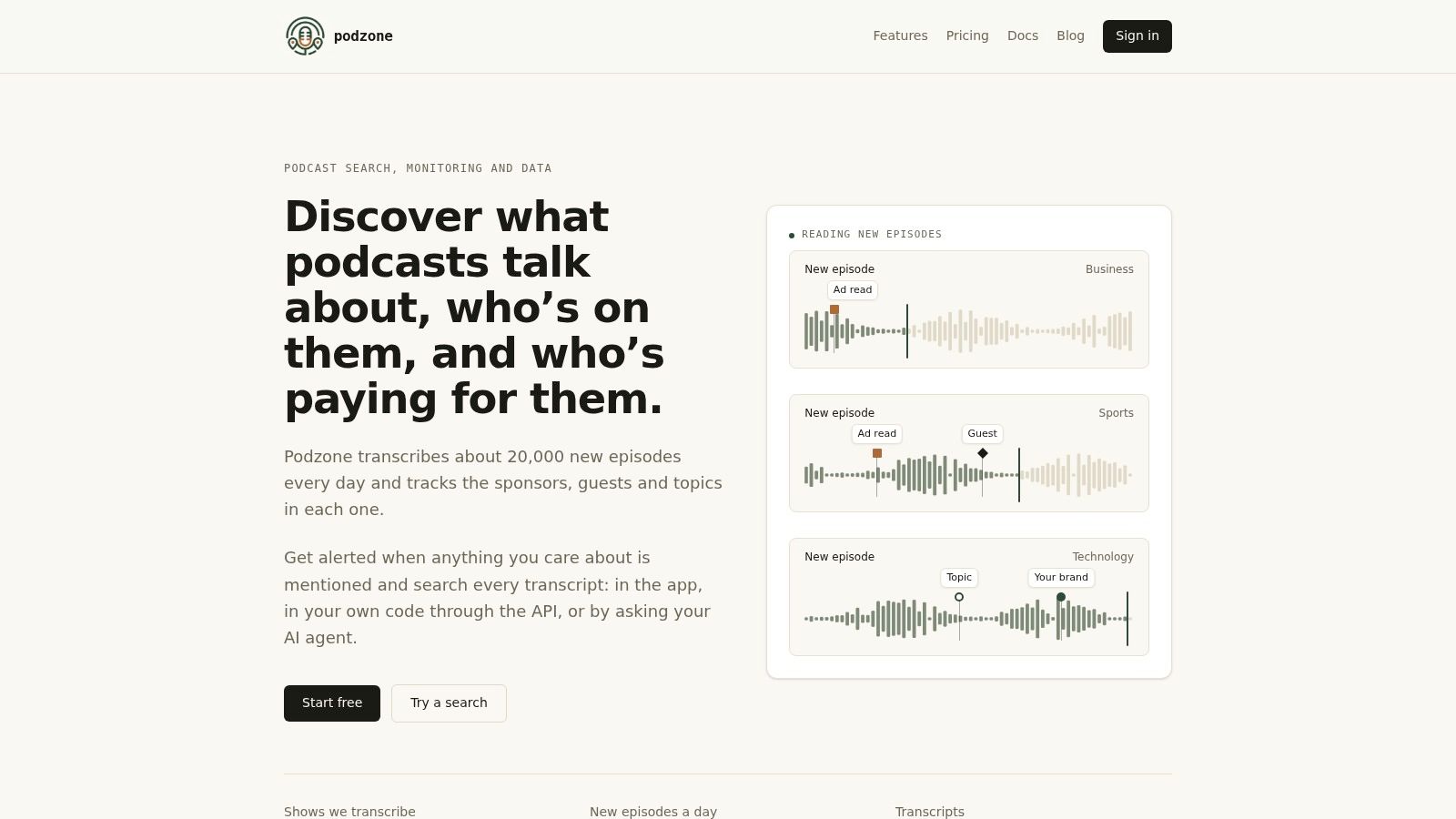
Podzone treats podcast audio as the primary source rather than an add-on. It ingests publicly published feeds, transcribes the episodes they reference, and makes the text searchable, with each match returning a transcript excerpt, show and episode details, and a link to the exact moment. Reported scale is more than four million feeds and roughly 30,000 new episodes a day. The service stops polling feeds that are withdrawn and removes material where required after a rights holder's request, which matters if a client ever asks why an old episode no longer appears.
Where it goes deeper than a mention count #
- Alerts: keyword rules for a brand, competitor, or person, with an optional AI check to cut noise. Matches arrive as an hourly email digest or as a signed webhook seconds after detection, and every match stays in the app and API for 60 days.
- Sponsors: which brands buy which shows, with timed ad reads, offer codes, and sponsorship trends. A sponsor named only in show notes is still counted and marked that way.
- People: hosts and guests, first and last appearance dates per show, and a view of who's making the rounds across shows, filterable by category.
- Build access: a REST API covering search, transcripts, sponsors, people, topics, and alerts, plus an MCP server for Claude, Cursor, or VS Code.
An alert you can forward without editing is worth three you have to explain.
The commercial case for this kind of coverage is straightforward. The IAB's U.S. Podcast Advertising Revenue Study with PwC reported revenue up 5% in 2023 to $1.9 billion and projected 12% growth in 2024. Sponsor-level evidence, not mention volume, is what buyers, sellers, and competitive teams argue over.
Plans start at a free tier with alerts, search, transcripts, sponsors, people, topics, and API access, capped at 1 user, 1 team, 20 transcript downloads a month, and 2 active alerts. Pro raises that to 5 users, 3 teams, 5,000 downloads, and 50 active alerts, and Teams lets agencies manage alerts for separate client groups.
Pros: timestamped evidence in a single view, delivery by digest or webhook, sponsor and people data beside mention search, and no coding needed to set an alert.
Cons: the Free plan's caps of 20 transcript downloads and 2 active alerts a month run out quickly for busy teams. Paid plan pricing for larger businesses.
Website: podzone.fm
2. CisionOne #
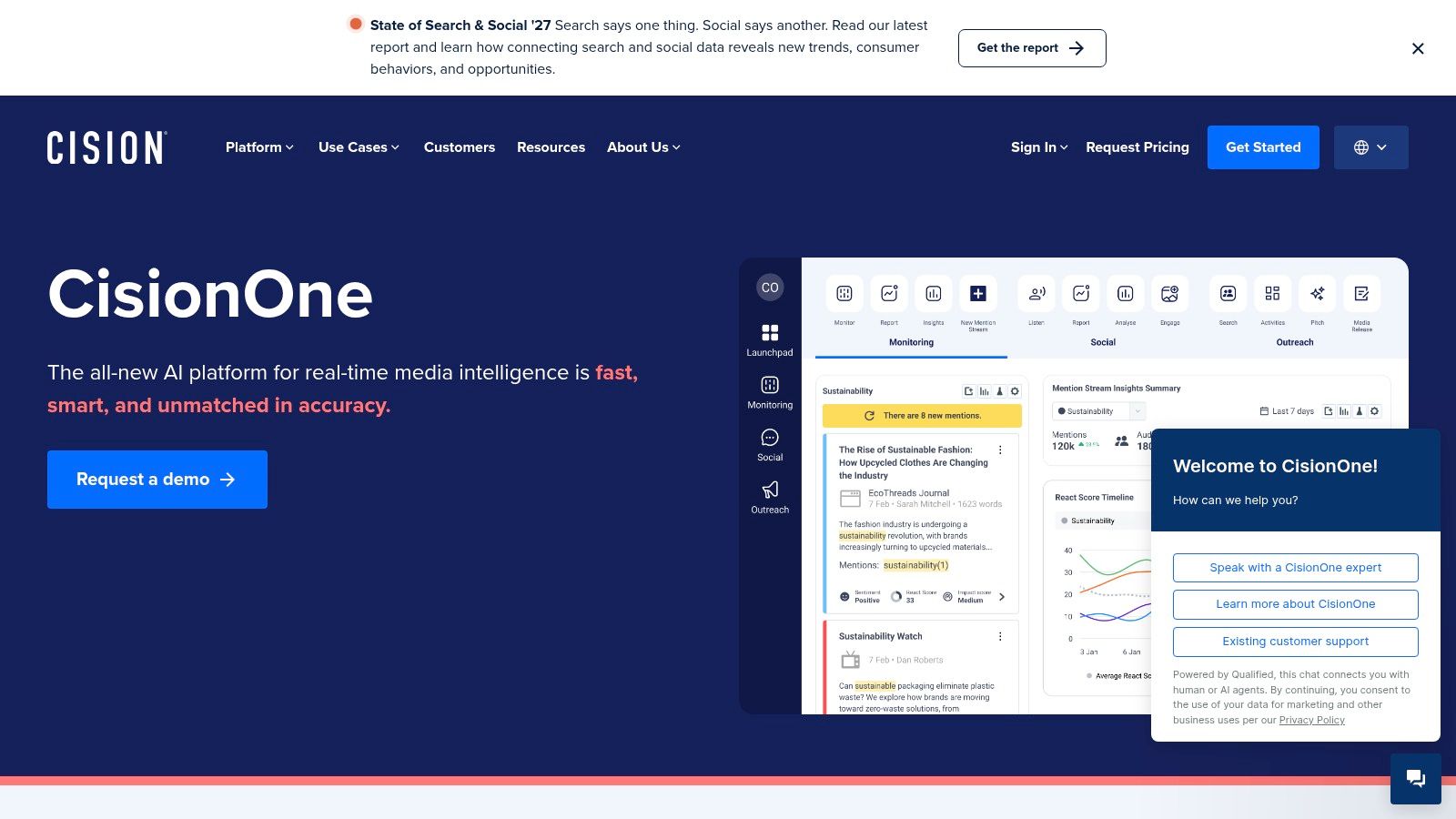
CisionOne is what most enterprise communications teams picture when they hear "media monitoring app": one system for coverage tracking, reporting, and media outreach. Channels run from online and print through broadcast, magazines, social, and podcasts. The podcast line is genuine, but it sits inside a much larger suite.
That breadth tracks how the market buys. A 2026 market analysis estimates the global PR tools market at USD 5.362 billion in 2026 and projects USD 13.71 billion by 2035, an 11.0% compound annual growth rate, with more than 72% of global enterprises using at least one PR platform for monitoring, analytics, or distribution (Business Research Insights).
- Mention Streams: keyword streams with boolean filters and customizable alerts.
- Coverage: online, print, broadcast, podcasts, magazines, and social in one feed.
- Reporting: dashboards, analytics, and exportable reports built for client packs.
- Delivery: mobile alerts plus Slack and Microsoft Teams notifications.
- Outreach: a journalist database and pitching tools in the wider platform.
Pros: one vendor for monitoring, reporting, and outreach, with channel breadth that suits a full communications calendar and boolean control over queries.
Cons: pricing is quote-based, so costs can't be compared before a sales conversation, and a team that only wants podcast or web alerts will pay for features it never opens. Ask for a live podcast match during the demo, on a show you choose.
3. Meltwater #
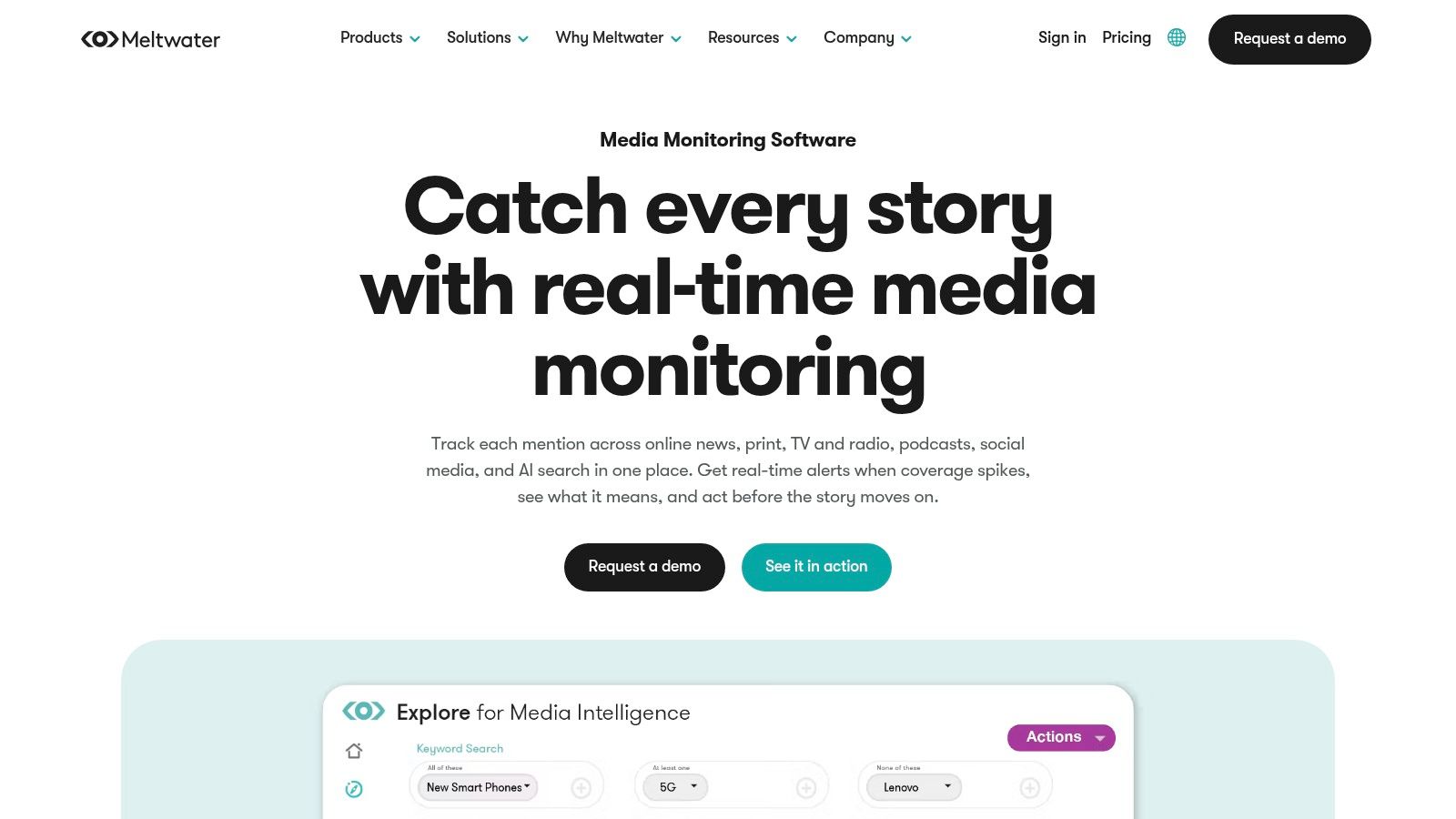
Meltwater's strength is the width of earned-media coverage and the reporting built on top of it. Online news, social, print, broadcast, and podcasts sit in one workspace, with AI-assisted summaries of sentiment, themes, and trends. Podcast coverage runs to tens of thousands of shows, though availability depends on your subscription level and market.
- Monitoring: digital, social, traditional media, and podcasts in a single account.
- Alerts and dashboards: custom keyword tracking with configurable views.
- Analysis: AI-supported summaries of sentiment, themes, and emerging trends.
- Comparison: reporting across brands, campaigns, and competitors.
- Extras: media databases and social tools in the wider product range.
Pros: the channel mix suits teams reporting across formats, analysis sits next to monitoring instead of in a separate tool, and multilingual programs are well supported.
Cons: podcast coverage won't include every feed, so niche shows can fall outside the index. There's no public price list, which makes budgeting hard for smaller teams, and the podcast layer is shallower than a dedicated transcript index.
Ask any broad-suite vendor one question before signing: show me a transcript match from a show with fewer than 5,000 downloads.
4. Critical Mention #
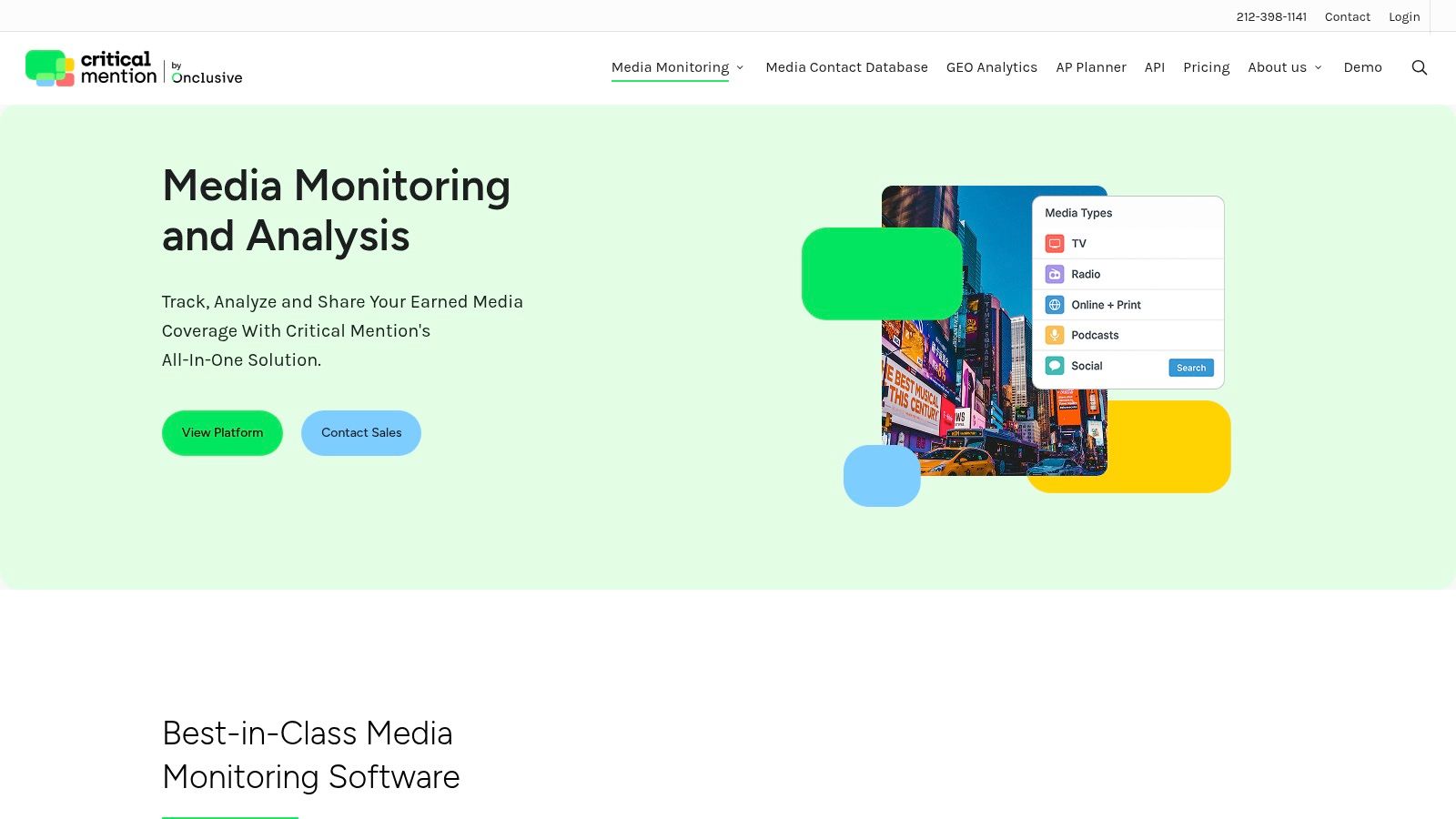
A morning alert flags a broadcast segment mentioning your client, and by standup the clip is trimmed, saved, and on its way. Critical Mention builds around that kind of same-day turnaround. It is a broadcast-first platform that handles podcasts well: speech-to-text transcripts make episode content searchable, alerts arrive in real time or as a digest, and clips can be edited without leaving the app. For teams whose coverage is mostly TV and radio with a podcast tail, that combination is unusually practical.
Review scores won't do the shortlisting for you. G2's media monitoring category reports an average rating of 4.49 out of 5, with individual products spanning roughly 3.9 to 4.7. Treat a score that tight as a filter for the shortlist. The judgement happens in the trial.
- Transcript search: podcast keyword matching built on speech-to-text.
- Alerts: real-time or digest delivery for matching mentions.
- Clips: editing, saving, and cloud storage for audio and video.
- Reporting: podcast mentions and transcripts included in coverage reports.
- Channels: broadcast and online media monitored alongside audio.
Pros: clips can go to a client the same morning, podcast coverage sits beside broadcast rather than in a separate product, and the interface is built for PR workflows.
Cons: pricing is quote-based, and some users report limits in social analytics and search workflows. If social listening is half your brief, test that side carefully.
Verification rule: listen to the 20 seconds before a clip as well as the 20 after it. Hosts set up their own quotes, and a sentence lifted without its lead-in can invert the meaning.
Critical Mention media monitoring
5. TVEyes #
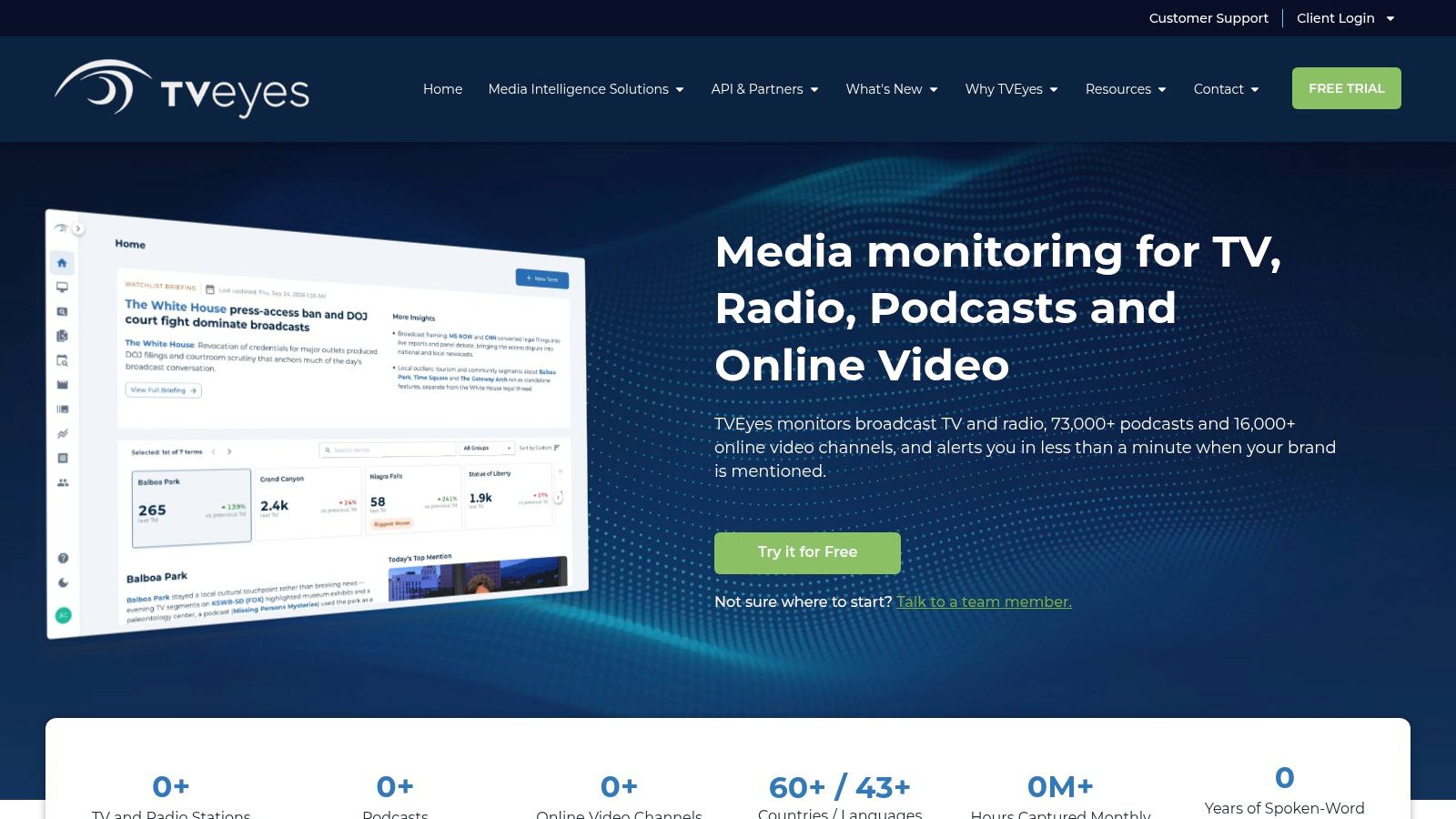
TVEyes is the pick when broadcast is the center of the program and podcasts are the second act. It records and transcribes TV, radio, podcasts, and online video, indexes the speech, and alerts on tracked terms. Podcast filters cover topic, category, and host, and results carry host contact details and listenership data.
Teams that move between TV clips and audio need a consistent handoff. This overview of broadcast monitoring services covers how clip capture, transcripts, and reporting fit together across formats.
- Transcript search and alerts across TV, radio, podcasts, and online video.
- Podcast filters by topic, category, or host.
- Clips and reporting built in, so a finding can be shared the same day.
- Research data including host contact information and listenership figures.
- API and partnership options for pushing results into other systems.
Pros: the index is built for spoken media rather than treating audio as a minor add-on, monitoring is paired with clipping and reporting, and a free trial can be requested without a contract.
Cons: teams that need broad social and web monitoring will find the source list narrow. Pricing isn't published, and transcript and podcast coverage should be confirmed for your regions and shows before you commit.
6. Muck Rack #
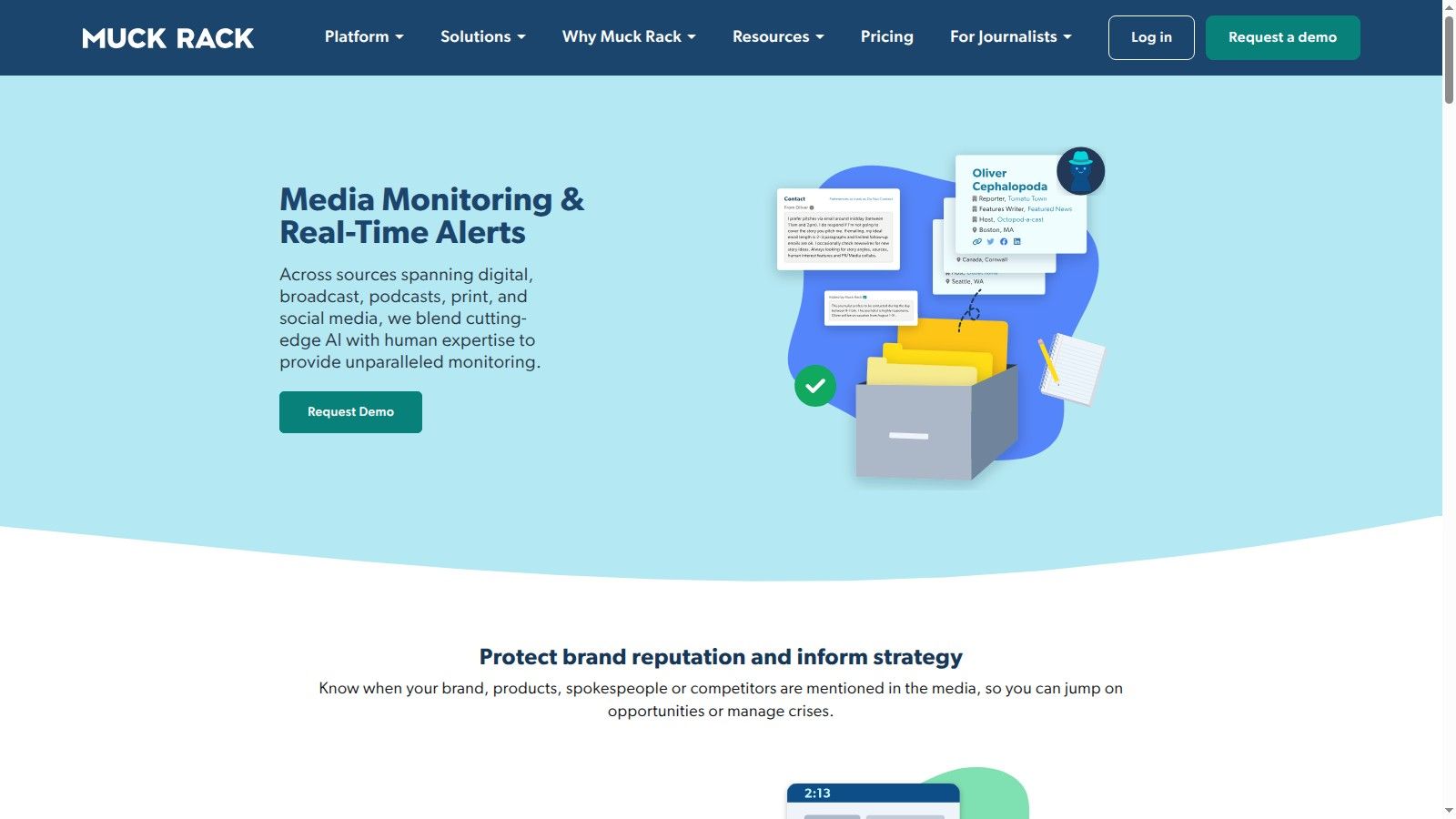
Muck Rack is a PR workflow tool with monitoring attached, which is either exactly right or beside the point depending on your team. Alerts cover online articles, podcast mentions, and other media, delivered by email or Slack. Podcast monitoring is included in the Standard and Premier tiers, with broadcast options depending on the plan.
- Keyword alerts for online articles, podcast mentions, and other coverage.
- Podcast monitoring included from the Standard tier upward.
- Delivery by email and Slack, so alerts land where the team already works.
- Journalist database, media lists, and pitching workflows in the same product.
- Spike notifications with AI summaries on higher tiers.
Pros: monitoring connects directly to journalist research and pitching, podcast tracking is part of the product rather than an integration, and the workflow suits agencies managing alerts and outreach for several clients.
Cons: there's no simple public price list, podcast and broadcast depth depends on tier, and a team that wants standalone podcast search will pay for a newsroom tool it doesn't need.
7. Agility PR Solutions #
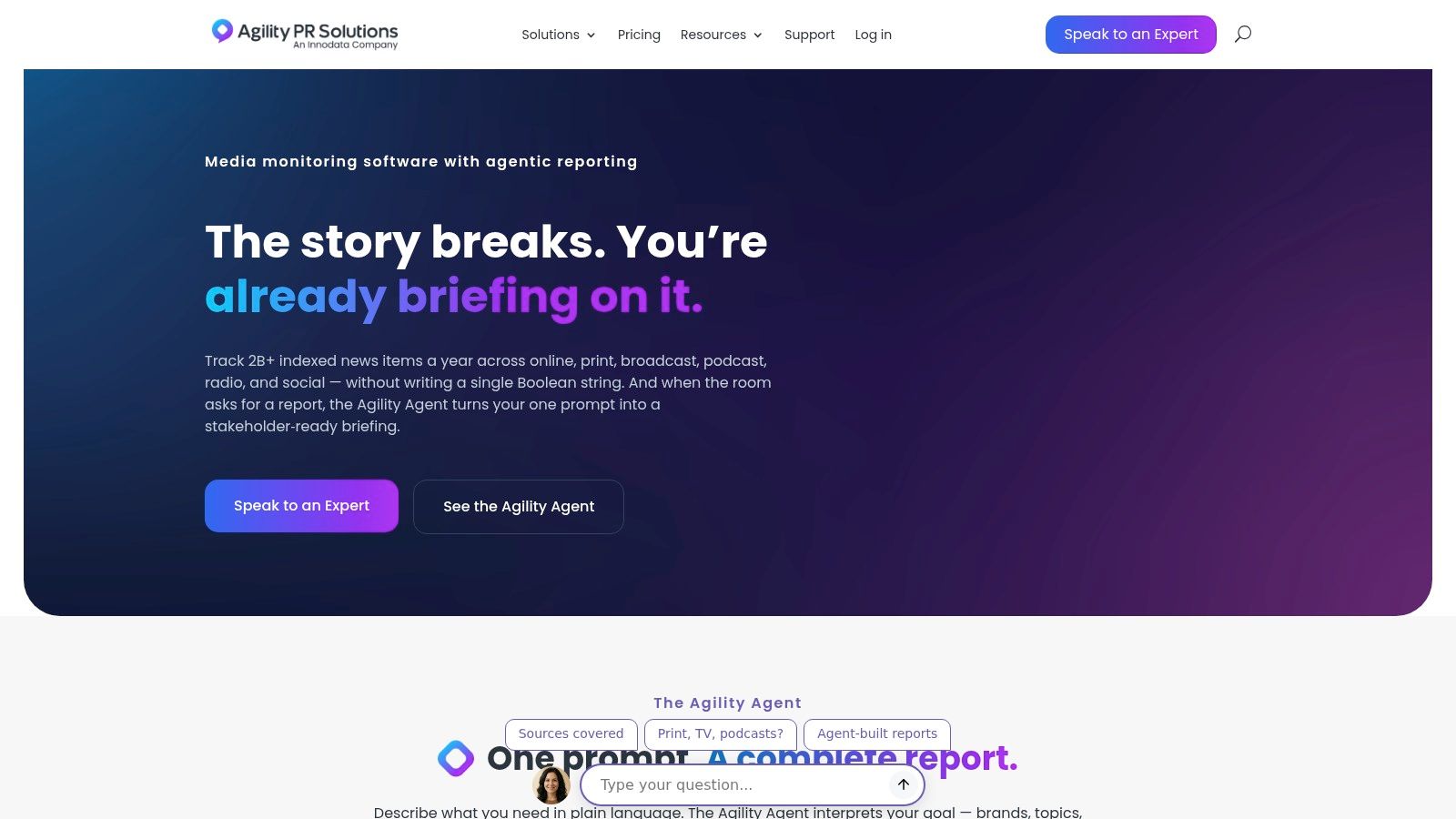
Agility sells monitoring software and, when you want it, the analysts who read it for you. Monitoring Topics handle keyword and boolean queries across online, print, broadcast, social, and podcasts, with alerts, briefings, and executive-ready reports on top. Podcast content arrives through TVEyes, which matters because it determines how deep the audio search goes.
- Monitoring Topics using keyword and boolean logic across source types.
- Podcast results alongside online, print, broadcast, and social coverage.
- Alerts and briefings formatted for executive readers.
- Analysis covering sentiment, share of voice, and coverage trends.
- Managed services for teams without spare analyst capacity.
Pros: software can be combined with analyst support, coverage and reporting can be customized to specific sources, and podcast monitoring sits inside a broader communications workflow.
Cons: pricing is quote-based, and podcast data comes from an external feed, so confirm show coverage and historical depth for your market. The platform is also more involved than a simple alerting tool.
8. Brand24 #
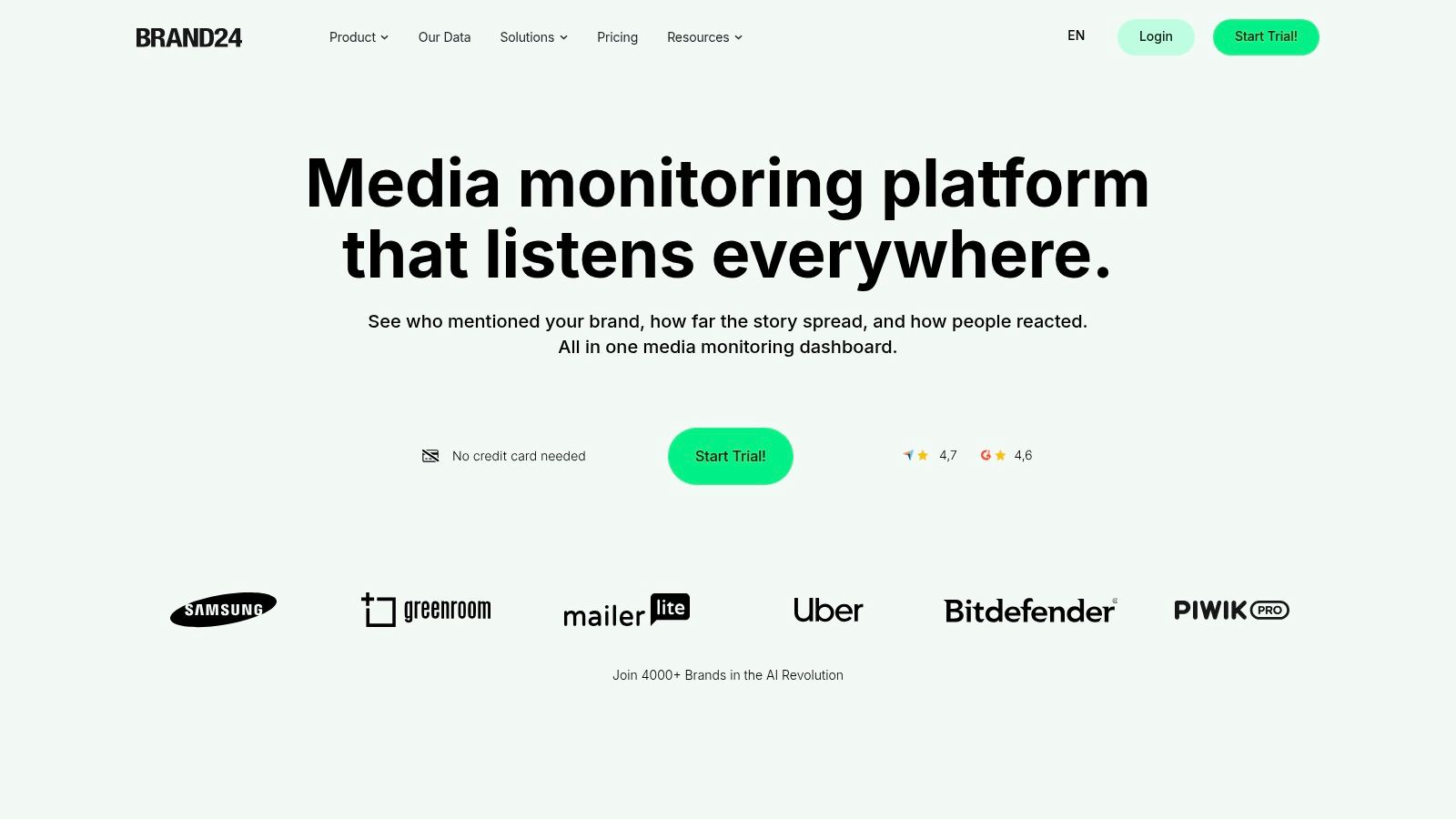
Brand24 is the tool small teams can evaluate on a Tuesday afternoon: published plans, a 14-day trial, and no sales call. It tracks keywords across web and social sources, lists podcasts among them, and adds sentiment, competitor comparison, and AI-assisted insights. It's a listening platform with podcast coverage, not a podcast research service.
If social listening drives your program, this roundup of social listening tools explains how the categories differ before you commit budget.
- Keyword tracking across web and social sources, podcasts included.
- Mention feeds, alerts, and sentiment analysis in one dashboard.
- Competitor comparison and share-of-voice reporting.
- AI-assisted analysis that summarizes what the feed is saying.
- Published tiers with defined mention and keyword limits.
Pros: public pricing and a trial make evaluation straightforward, review commentary consistently points to an easy dashboard, and the entry cost is far below quote-only enterprise suites.
Cons: plans cap keywords, users, and mention volumes, results include irrelevant matches that need filtering, and automated sentiment deserves a human check. Test the podcast side specifically if timestamped audio passages matter for reporting.
9. Talkwalker (Lumen by Talkwalker) #
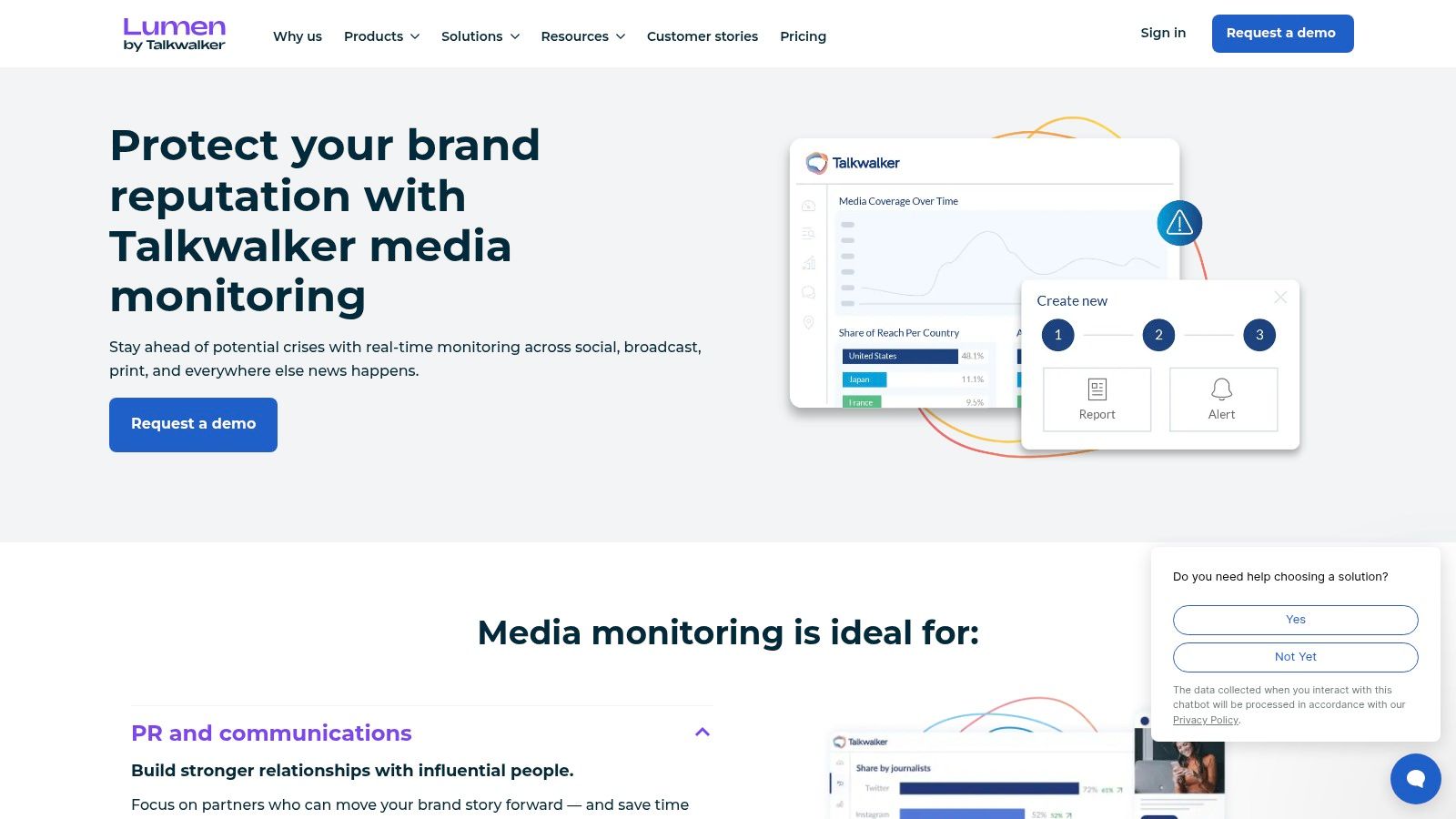
Talkwalker covers a lot of ground: online, print, broadcast, social, video, images, and podcasts, with multilingual analysis aimed at multinational teams. Visual listening extends detection to logos in images and video, and AI summaries and an assistant help analysts work through volume. Custom plans vary data volume and capability, so two buyers can end up with quite different products.
- Coverage across more than 150 million websites, social networks, and traditional media.
- Alerts, sentiment analysis, dashboards, and custom scoring.
- Visual listening for brand references in images, video, and audio.
- AI summaries and an assistant for interrogating coverage.
- Quote-based plans with different data volumes and feature sets.
Pros: global coverage and multilingual analysis suit teams reporting across markets, visual listening catches references that text monitoring misses, and the analytics support reputation and trend work rather than just clipping.
Cons: custom pricing makes costs hard to estimate without a sales discussion, the platform may be excessive for teams that need keyword alerts, and podcast transcript depth should be confirmed for your plan specifically.
10. Mentionlytics #
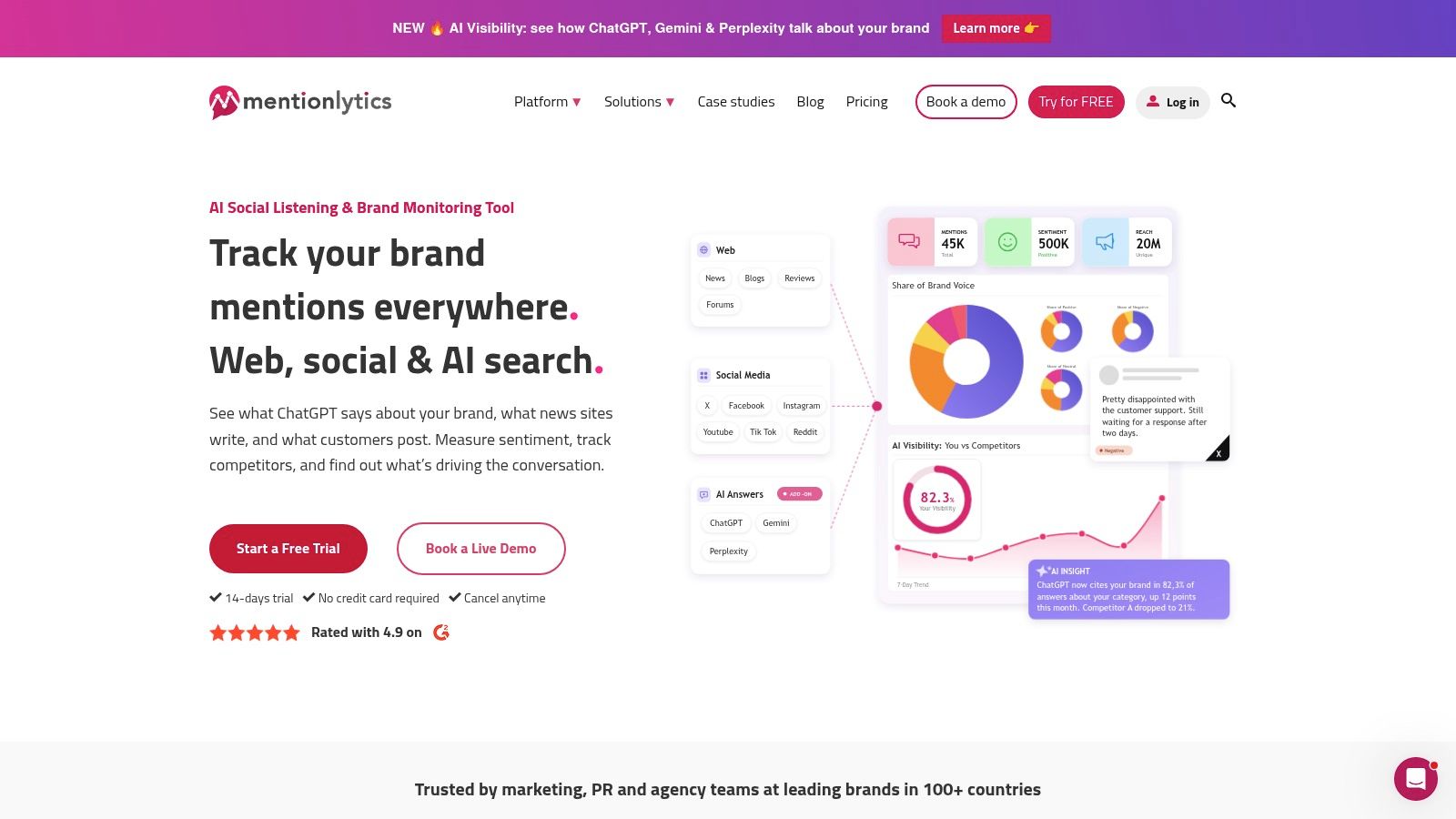
Mentionlytics sits in the affordable listening tier and includes podcast monitoring without making it the headline. Podcast results can carry timestamps and short context descriptions, which is more than most social-first tools manage, and they arrive in the same feed as social, news, blog, forum, and review mentions.
- Coverage of social media, news sites, blogs, forums, review platforms, and podcasts.
- Podcast mentions with timestamps and context summaries.
- Alerts, sentiment analysis, and anomaly detection.
- Share-of-voice measurement and reporting tools.
- Published tiers plus a 14-day trial.
Pros: podcast monitoring sits beside broader web and social listening, timestamps shorten the check on a match, and published pricing plus a trial make it easy to test.
Cons: podcast monitoring may require support-assisted setup, so raise it early in the trial, and coverage plus metadata should be verified against the shows you track.
Start with one competitor keyword and one of your own brand terms, then read a week of results before you trust any sentiment score.
Mentionlytics media monitoring
Media monitoring apps compared at a glance #
Most roundups rank these platforms by name recognition. The more useful test is how each app handles five practical dimensions: coverage, alerting, search depth, reporting, and integration. Podcast and spoken-word coverage is where the differences surface fastest, since several broad platforms treat it as an add-on rather than a core source.
| Item | Best for | Podcast coverage | Alerting options | Integration options | Pricing transparency |
|---|---|---|---|---|---|
| Podzone | Podcast-focused PR, brand, and sponsor research | More than four million podcast feeds; searchable transcripts with timestamped mentions | New-mention alerts; webhooks within seconds and hourly email digests | API, signed webhooks, and MCP server | Free and paid plans available |
| CisionOne | PR teams managing monitoring and outreach in one platform | Podcasts included alongside other media channels | Custom alerts, mobile, Slack, and Microsoft Teams | Slack and Microsoft Teams notifications; wider PR suite | Quote-based |
| Meltwater | Organizations needing cross-channel media intelligence | Tens of thousands of podcasts; availability may vary by plan | Custom alerts | Broader media and social-media products | Prices not publicly listed |
| Critical Mention | Teams monitoring and sharing broadcast and podcast coverage | Transcript keyword search, clips, and reporting | Real-time or digest alerts | No specific integrations stated | Quote-based |
| TVEyes | Broadcast-heavy teams monitoring spoken media | Podcasts included, with searchable transcripts and clips | Alerts for tracked terms | API and partnership options | Prices not publicly listed |
| Muck Rack | PR teams combining coverage monitoring with journalist outreach | Podcast monitoring in Standard and Premier plans | Email and Slack alerts; coverage-spike notifications on higher tiers | Slack; journalist research and pitching workflows | Prices not publicly listed |
| Agility PR Solutions | Teams wanting broad monitoring with optional analyst support | Podcast monitoring through TVEyes feed | Alerts and briefings | No specific integrations stated | Quote-based |
| Brand24 | Smaller teams seeking self-serve web and social listening | Podcasts included among monitored sources | Mention alerts | No specific integrations stated | Public plans and a 14-day trial |
| Talkwalker (Lumen by Talkwalker) | Global teams needing multilingual, cross-channel analysis | Podcasts included; transcript-search depth may vary | Real-time alerts | No specific integrations stated | Custom quote-based plans |
| Mentionlytics | Teams combining podcast mentions with web and social monitoring | Podcast mentions can include timestamps and context | Alerts and anomaly detection | No specific integrations stated | Published tiers and a 14-day trial |
Two patterns stand out in the rows. Quote-based pricing dominates the broadcast and PR-suite end of the market, while self-serve listening tools publish tiers or offer trials. Podcast depth ranges from transcript-level search with timestamps down to keyword matching against feed metadata, so confirm what "podcast monitoring" means with each vendor against the shows you track.
How to Pick and Pilot Your Media Monitoring App #
Match the tool to your channel mix before you compare anything else. If a third of your coverage questions start with "did anyone say our name on a podcast," transcript-level search isn't a nice extra. A tool that only matches keywords in episode titles, show notes, or a licensed partner feed will miss the host-read ad at minute 31.
Then test alerting speed on real content. Set a rule for a term likely to appear in a show that publishes daily, and time how long the match takes to arrive. Note whether it lands in email, Slack, or a webhook, and whether the alert carries the quote and timestamp or just a link back to a dashboard.
Integration decides whether the data compounds or dies in a tab. Teams that need monitoring inside their own systems should prioritize API and webhook support. Podzone's API covers search, transcripts, sponsors, people, topics, and alerts, and pushes each match as a signed webhook, with an MCP server connecting the same data to Claude, Cursor, or VS Code.
Agencies should check workspace structure early. Look for separate client workspaces, per-client alert grouping, and user limits that match your team rather than your ambition. The Pro tier at Podzone, for example, includes 5 users, 3 teams, 5,000 transcript downloads a month, and 50 active alerts, with Teams designed for managing alerts across client groups.
Treat mention volume as a weak success metric. Edison Research's The Podcast Consumer 2025 reports that 28% of Gen Z monthly podcast listeners discover podcasts primarily through YouTube searches (Edison Research). When discovery happens on video and social platforms, an audio-only view captures part of the picture, and one trusted host recommendation can outweigh dozens of passing references.
Budget confirms the direction. Digital audio advertising revenue reached $8.4 billion in 2025, up 10.2% from $7.6 billion in 2024, according to IAB and PwC figures reported by RBR. That spending is why sponsor-level evidence, not mention counts, is what advertisers ask for first.
Before signing anything, verify coverage against your own history. Pick five shows you know mentioned your brand last quarter and search for each one. Run a free tier or a trial on two tools in parallel, compare the same five queries, and only then discuss a quote-based contract.
Podzone turns podcast episodes into searchable, timestamped evidence: keyword alerts, full transcripts, sponsor and ad-read tracking, and people data, all available through the app, the API, and an MCP server for AI assistants. Every plan, including the free one, includes alerts, search, transcripts, sponsors, people, topics, and API access, so you can run the five-show test yourself before paying anything. Visit Podzone to set up your first keyword rule and see the matching moments for yourself.
- media monitoring app
- media monitoring tools
- podcast monitoring
- PR monitoring software
- social listening